 English
 Français
 Español
 Deutsch

Replacement Steel Dart Tips: Precision Components for Reliable Steel-Tip Dart Performance

Replacement steel dart tips are small components with a major influence on the performance, safety, and service life of a steel-tip dart. Installed at the front of a dart barrel, the tip is responsible for entering and holding in a sisal or bristle dartboard. When a tip becomes bent, dull, damaged, or worn, even a well-balanced dart can lose its expected flight and board penetration. A dependable replacement tip restores the dart’s functionality without requiring the player to purchase a complete new set.
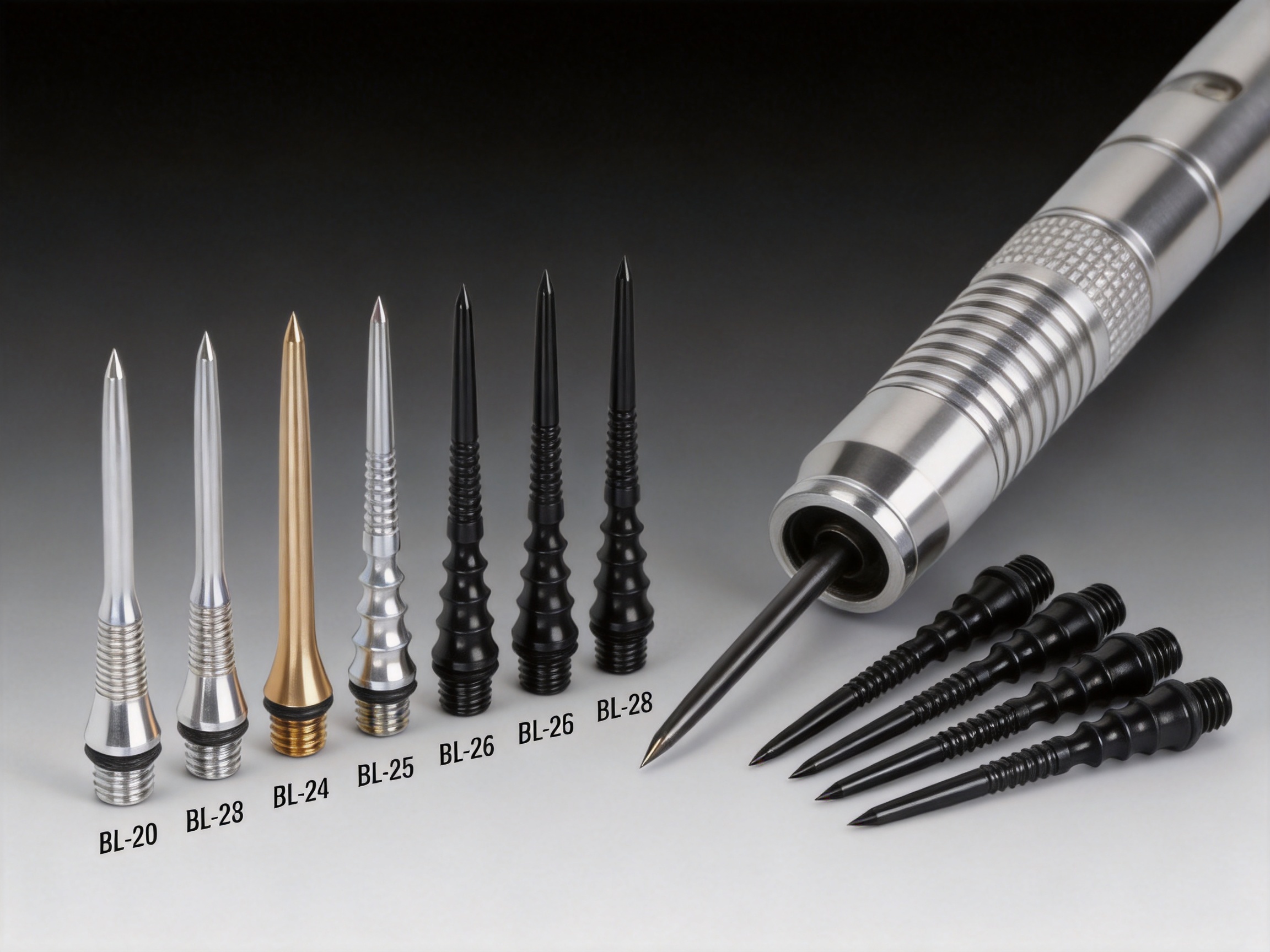
The BL-20 to BL-28 replacement steel dart tip models provide a practical range of options for players, retailers, distributors, training facilities, pubs, clubs, and professional competition environments. Differences between these models may include overall length, point profile, surface treatment, threading configuration, and the shape of the section that enters the dart barrel. This model range gives buyers greater flexibility when matching replacement points to different dart constructions and usage requirements.
Manufactured by Yiwu Yili Sports Sports Goods Co., Ltd., these replacement tips are part of a broader product program covering dartboards, dartboard cabinets, steel-tip darts, soft-tip darts, and dart accessories. The company’s focused experience in the dart category, structured production system, automated equipment, and dedicated quality-control department support consistent manufacturing for international business customers.
Why Replacement Steel Dart Tips Matter
A steel-tip dart is a precision assembly consisting of a tip, barrel, shaft, and flight. Although the tip is relatively small, it performs several essential functions. It must penetrate the board cleanly, remain secure in the barrel, resist bending during repeated impacts, and maintain a suitable relationship with the dart’s center of gravity. A poor-quality tip can affect all of these factors.
During normal play, a dart tip repeatedly enters a dense sisal surface. It may also strike wire, another dart, the floor, or a hard surrounding surface. Repeated impact can gradually round the point, create small bends, loosen the threaded connection, or produce surface damage. In a high-use environment, such as a pub league or professional practice room, replacement may be necessary much sooner than in occasional home use.
A damaged tip can cause several problems. A bent point may make the dart enter the board at an inconsistent angle. A dull point may require excessive throwing force and may fail to hold securely in the sisal. A loose point may shift during flight or release. A tip that is too long or too short for the barrel may change the dart’s balance and influence the player’s release. Replacing only the damaged tip is therefore an efficient way to preserve the original barrel and maintain a familiar dart setup.
For players who practice frequently, spare tips are an important part of equipment preparation. A complete replacement set can be kept in a dart case, workshop, retail package, or tournament service station. The small size and low storage requirement of replacement tips make them especially convenient for mobile players and organizations that need to respond quickly to equipment failures.
Product Overview
Replacement steel dart tips are threaded, pointed components designed for installation in compatible steel-tip dart barrels. They are made from hardened steel and machined to form a penetration point suitable for sisal or bristle dartboards. Depending on the selected model, the tip may have a standard cone, a more aggressive point, a rounded penetration profile, or a specialized shape intended to support a particular playing preference.
The BL-20 through BL-28 series represents a selection of tip designs rather than a single universal shape. This model range can help wholesalers and brands offer multiple options to customers who have different requirements for penetration, visual appearance, replacement length, and dart balance. Buyers should verify thread compatibility and dimensional specifications before placing an order, especially when replacing tips from a different manufacturer.
| Model Range | Typical Design Consideration | Potential User Requirement |
|---|---|---|
| BL-20 | Standard replacement configuration | General home, club, and retail use |
| BL-21 | Alternative point length or profile | Players seeking a different board entry feel |
| BL-22 | Balanced replacement design | Routine maintenance and spare-part supply |
| BL-23 | Possible variation in grip or shoulder area | Users requiring secure tightening and removal |
| BL-24 | Alternative penetration geometry | Frequent players and competitive practice |
| BL-25 | Replacement option for selected dart assemblies | Retail and private-label programs |
| BL-26 | Specialized point shape or surface treatment | Players with specific setup preferences |
| BL-27 | Alternative length, finish, or grip detail | Customization and assortment expansion |
| BL-28 | Additional replacement configuration | Professional, commercial, and OEM supply |
The exact dimensions and compatibility of each model should be confirmed through technical drawings, samples, or pre-production approval. This is especially important for private-label programs, where the tip may need to match a customer’s existing barrel, packaging, and product specifications.
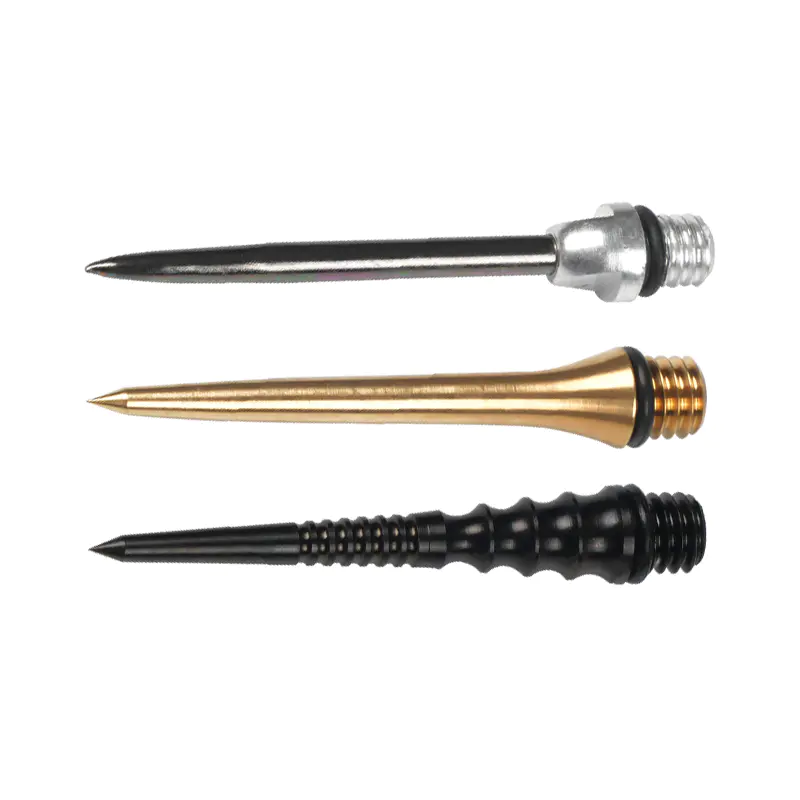
Replacement Steel Dart Tips
Material and Mechanical Advantages
The principal material advantage of these tips is the use of hardened steel. Steel provides the strength and wear resistance required for repeated penetration into a sisal board. Compared with softer metals, hardened steel is better suited to retaining a sharp point and resisting deformation during ordinary use. Material selection also supports a more consistent manufacturing process because the finished component can be machined to repeatable dimensions.
Hardness must be balanced with toughness. A tip that is excessively hard but brittle may be more likely to chip or fracture under an impact. A tip that is too soft may bend or become dull quickly. A suitable heat-treatment and finishing process helps create a practical balance between point retention, impact resistance, and reliable service life.
The point geometry is another important advantage. A properly formed point enters the sisal with controlled resistance rather than requiring excessive force. The point should be sharp enough to penetrate the board but not so aggressive that it causes unnecessary fiber damage. Different players prefer different levels of penetration, which is why a model family with varied profiles can be more useful than a single generic replacement point.
The threaded connection is also critical. The tip must screw securely into the barrel and remain stable during throwing. The thread should be formed accurately, with a clean lead-in and no excessive burrs. Consistent threading reduces wobble, improves assembly, and allows the player to remove and install the tip with appropriate tools. A secure connection also helps preserve the intended weight distribution of the dart.
Some models may include a smooth or grooved section near the barrel. This area can provide a more reliable grip when tightening or removing the tip with a tip tool. A carefully designed shoulder or grip ring can help prevent slipping during maintenance without creating an uncomfortable transition between the point and barrel.
Natural steel and black-coated finishes offer different product benefits. Natural steel provides a traditional technical appearance and makes the machined surface easy to inspect. A black-coated finish can create a modern visual effect and support a coordinated appearance with dark barrels or accessories. Surface treatment may also help reduce visible discoloration when handled properly, although all steel components should be kept dry and maintained according to the supplier’s recommendations.
Performance in Sisal and Bristle Dartboards
Sisal and bristle dartboards are designed to accept steel points while allowing the fibers to close around the penetration channel. A suitable replacement tip should enter the board cleanly and hold securely without excessive lateral movement. Point sharpness, taper, diameter, length, and surface finish all influence the result.
A standard conical point is appropriate for many general-use applications. It provides a familiar entry profile and is compatible with the expectations of a broad range of recreational and competitive players. A more aggressive point may be selected by players who want increased board grip or who frequently play on boards with a firmer surface. A rounded or less aggressive profile may appeal to users who want to reduce the tendency of the point to catch excessively during removal.
Board condition also affects performance. A new or dense sisal board may require a slightly different point behavior than a well-used board with a softer surface. Temperature, humidity, board age, and the location of the throw can all influence penetration. Because of these variables, offering several tip profiles allows distributors and brands to serve a wider market instead of assuming that every customer wants identical performance.
The tip should be maintained as part of a complete dart system. Players should inspect the point regularly, remove visible burrs carefully, and replace any tip that is visibly bent or cracked. Filing or sharpening should be performed cautiously because removing too much material can alter the geometry and weaken the point. In many cases, replacing a worn tip is more reliable than attempting extensive reshaping.
A consistent point also supports grouping performance. When players throw several darts in succession, small differences in angle and board entry can affect how closely the darts group. A stable replacement tip helps preserve the dart’s original behavior and reduces the need for the player to adapt to an unpredictable component.
Advantages Compared with Generic Replacement Tips
Generic replacement tips may appear similar from a distance, but important differences can exist in steel quality, point hardness, thread accuracy, surface smoothness, and dimensional consistency. A low-cost tip with poor machining may have an uneven point, rough threads, or a shoulder that does not seat correctly against the barrel. These issues can create wobble, looseness, or inconsistent board penetration.
The BL-20 to BL-28 range is positioned as a more structured replacement solution. Instead of providing only one undifferentiated point, the product family allows customers to select among multiple designs. This is valuable for retailers that need assortment depth, brands developing different dart series, and distributors serving customers with varied technical preferences.
Manufacturing consistency is another advantage. When tips are produced through controlled processes with inspection at multiple stages, the buyer can expect more uniform dimensions across a production batch. Consistency is particularly important for B2B customers because retail products, private-label sets, and replacement packs must maintain a predictable customer experience.
Reliable threading can reduce installation problems. If a generic tip has an inconsistent thread, it may feel tight in one barrel and loose in another. Poor alignment may cause the point to sit off-center. Accurate machining helps the tip align with the barrel axis, supporting better flight stability and reducing unnecessary stress on the connection.
Quality control also helps reduce hidden costs. A defective tip may lead to customer complaints, returns, repacking, replacement shipments, and damage to a retailer’s reputation. For a wholesaler or brand owner, selecting a supplier with defined inspection procedures can be more economical than choosing the lowest initial unit price without considering failure rates and after-sales issues.
Another advantage is the possibility of coordinated product development. A specialized dart manufacturer can evaluate replacement tips together with barrels, shafts, flights, and packaging. This integrated approach allows the tip to be considered as part of a complete dart rather than as an isolated metal component.
Precision Manufacturing Process
Raw Material Inspection
Manufacturing begins with the selection and inspection of steel material. Incoming material should be checked for dimensions, surface condition, composition requirements, and suitability for machining and hardening. Consistent raw material supports stable results during turning, threading, heat treatment, and finishing.
Material inspection is especially important for small components because minor variations can have a noticeable effect on point strength and dimensional accuracy. A structured receiving process helps prevent unsuitable material from entering production and provides traceability for later quality analysis.
Machining and Point Formation
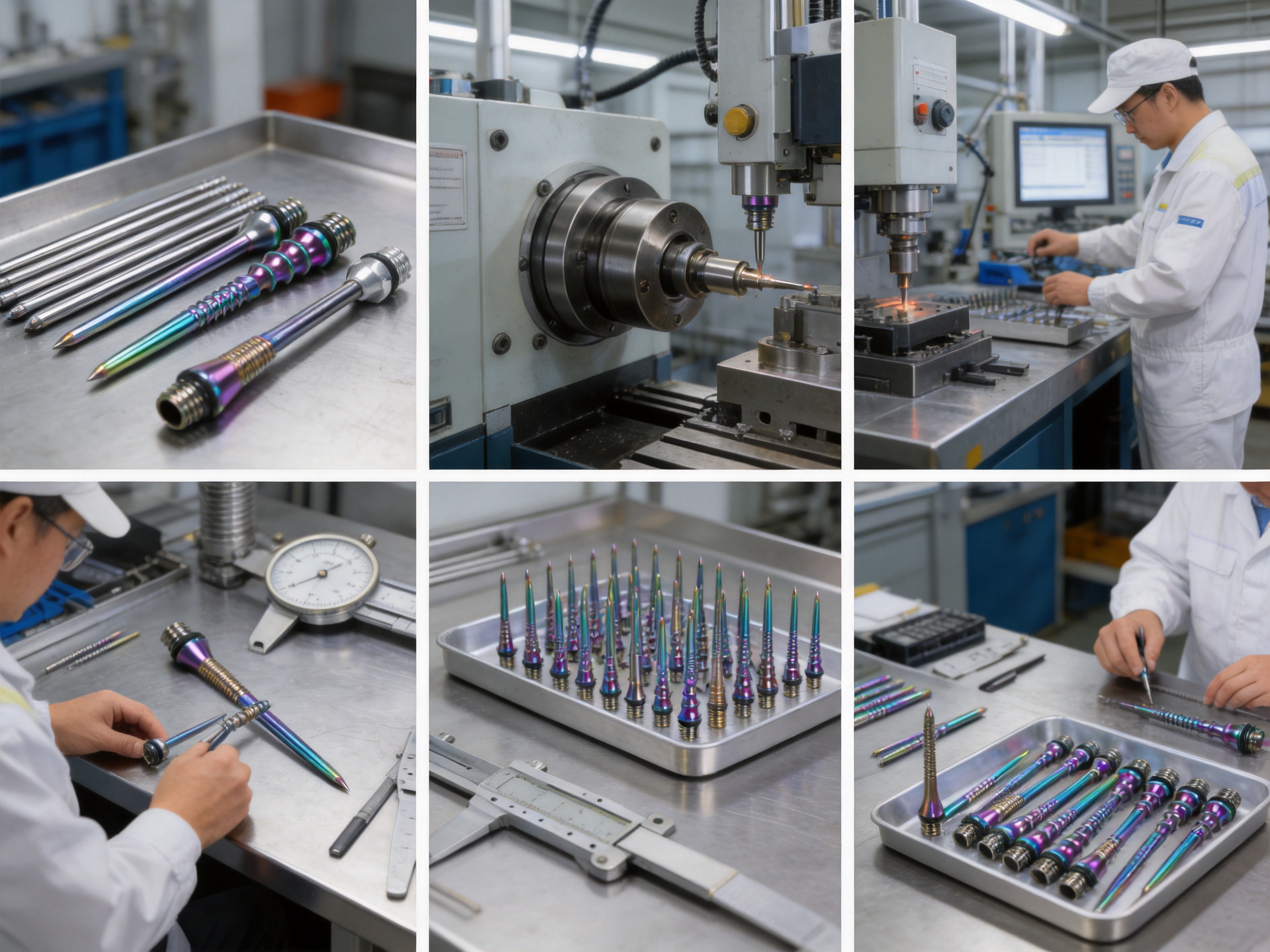
Steel blanks are processed through precision machining equipment to create the required external profile. The point is formed through controlled cutting and shaping operations. Depending on the model, the process may create a standard taper, a sharper penetration angle, a rounded point, or another specialized geometry.
Machining must control concentricity between the point, body, and threaded section. If these areas are not aligned, the finished tip may rotate unevenly when installed in the barrel. Automated or semi-automated equipment can improve repeatability by maintaining programmed dimensions and reducing variation between operators.
Surface quality is also considered during machining. Excessive tool marks, burrs, or rough transitions can interfere with installation and may damage the barrel thread. Proper tooling selection, maintenance, and process monitoring help produce a cleaner component.
Thread Production
The thread is formed to match the intended dart barrel connection. Thread accuracy includes pitch, diameter, depth, lead-in, and alignment. A clean thread allows the tip to be installed with a suitable amount of resistance and seated correctly against the barrel.
Thread inspection can be performed using gauges, sample barrels, visual checks, and dimensional measurement. For high-volume orders, regular sampling during production helps identify tool wear before it creates a large quantity of nonconforming parts.
Heat Treatment and Hardening
Heat treatment improves the mechanical properties of the steel. The process must be controlled carefully because excessive or uneven treatment can cause distortion, brittleness, or inconsistent hardness. Appropriate treatment helps the tip resist bending and retain its point during repeated use.
After hardening, parts may require additional finishing or straightening. The manufacturer’s process engineers must balance production efficiency with the dimensional requirements of the finished tip. Controlled cooling, inspection, and handling are important parts of this stage.
Surface Finishing
Surface finishing may include cleaning, polishing, deburring, and optional coating. These operations improve appearance, remove unwanted residues, and create a more consistent surface. Black-coated versions may receive an additional treatment selected for visual uniformity and practical durability.
Finishing should not obstruct the thread or significantly change the point dimensions. The tip must continue to install correctly after coating or other surface treatment. Finished surfaces are inspected for uneven color, peeling, scratches, exposed areas, and other visible defects.
Final Inspection and Packing
Before packing, finished tips are checked for appearance, point condition, thread integrity, dimensions, and general assembly suitability. Sampling standards can be established according to order size and customer requirements. For customized programs, inspection criteria may be agreed upon during the product-development stage.
Packaging protects the tips from moisture, contamination, and mechanical damage during storage and transport. Retail packaging can be developed in bags, blister packs, boxes, or other formats according to the customer’s sales channel. Bulk industrial packaging may be more suitable for dart manufacturers and assembly facilities.
Automation and Production Capacity
Yiwu Yili Sports Goods Co., Ltd. operates an approximately 25,000-square-meter facility with dedicated areas for component processing, assembly, packaging, and warehousing. This organized layout supports a clear production flow from incoming material to finished goods. Separate functional areas can reduce unnecessary movement, improve scheduling, and make it easier to coordinate different product categories.
The company has invested in automation and proprietary equipment development to improve efficiency and reduce manual variation. Automated production lines are especially valuable for small precision components because they can repeat programmed operations at a consistent pace. Automation does not eliminate the need for skilled personnel; instead, it allows technical staff to focus on process control, equipment maintenance, inspection, and improvement.
For international B2B customers, capacity planning is a critical consideration. A supplier may need to support regular replenishment, seasonal demand, new product launches, and customized packaging at the same time. A newly constructed production facility and structured manufacturing system provide a stronger foundation for long-term supply programs and project-based orders.
The company’s focus on dart-related products also creates operational advantages. Experience with barrels, points, dartboards, accessories, and packaging helps production teams understand how components interact. This category specialization can shorten communication cycles during product development and make it easier to identify practical solutions when a customer requests a change in tip profile, finish, packaging, or assembly method.
Quality Control System
An independent QC department oversees raw material inspection, in-process monitoring, and finished product testing. This separation supports objective evaluation throughout the production cycle. Rather than checking only the final packed product, a structured QC system identifies problems earlier, when corrective action is less costly and more effective.
Raw material control helps confirm that the incoming steel is suitable for the required application. In-process checks can monitor point dimensions, thread quality, machining condition, heat-treatment results, and surface finish. Final inspection verifies that packed products meet the agreed standards for size, weight, appearance, and general usability.
For replacement tips, dimensional accuracy is particularly important. A difference that appears small on paper may affect compatibility with a dart barrel. Quality procedures should therefore include appropriate gauges, calibrated measuring tools, sample installation checks, and visual inspection under suitable lighting.
Weight control may also be relevant. Individual replacement tips do not always need to match a complete dart set exactly, but consistent weight supports predictable product specifications. For customers selling replacement tips in retail packs, weight and quantity checks also help ensure package accuracy.
Appearance inspection protects the customer’s brand image. Retail buyers expect tips to have a clean, professional finish without obvious scratches, rust, burrs, coating defects, or irregular points. Good packaging cannot compensate for poor component presentation, so final visual inspection remains an important step.
Quality records can support long-term cooperation. Production data, inspection results, corrective actions, and sample approvals help create a reference for repeat orders. When a customer reorders the same BL model, documented specifications can reduce misunderstandings and improve continuity.
Options for Wholesalers and Private-Label Brands
Replacement steel dart tips are suitable for several business models. A wholesaler may purchase standard packs for distribution to sporting-goods stores, dart shops, clubs, and online sellers. A brand owner may include replacement tips with a dart set or offer them as a separate accessory. A dartboard manufacturer may add them to a broader maintenance range. A tournament organizer may purchase bulk quantities for equipment service.
Private-label customers can discuss packaging design, labeling, barcode placement, pack quantity, finish, and model selection. A brand may choose to sell one standard point for simple inventory management or create a tiered range with standard, performance, and professional options. The BL-20 to BL-28 series provides a foundation for that type of assortment planning.
OEM and ODM cooperation may include more than printing a logo. Customers can request a particular length, point shape, grip detail, coating, package format, or combination of models. Product development should begin with a technical review of the intended barrel, target user, board type, expected volume, and retail positioning.
Sample approval is recommended before mass production. Samples allow the buyer to test thread fit, point alignment, penetration, removal behavior, finish, packaging, and compatibility with existing darts. Testing by actual players can provide additional feedback about grip, balance, and board performance.
For distributors, an assortment of replacement tips can increase the value of each customer relationship. Players who purchase darts may later need points, shafts, flights, cases, or maintenance tools. A complete accessory program helps retailers respond to recurring needs and encourages repeat purchases.
Application Scenarios
Home Game Rooms
Home users often keep a sisal dartboard for recreation, family activities, or regular practice. Replacement tips allow them to maintain their darts without replacing an entire set. A small package stored near the board can provide a convenient solution when a point becomes bent or lost.
Pubs and Clubs
Pubs, clubs, and entertainment venues typically experience higher equipment usage than private homes. Darts may be used by many players with different throwing styles, and points may contact the board surround or floor more frequently. Keeping replacement tips on-site helps staff or regular players return equipment to service quickly.
League and Tournament Play
League players and tournament participants often rely on familiar dart setups. Replacing a damaged tip instead of changing the entire dart helps preserve the player’s preferred barrel, weight distribution, and grip. Spare tips are especially useful during travel because they take up little space in a dart case.
Training Centers
Coaching facilities and practice centers may operate multiple boards for long hours each day. Their equipment requires routine inspection and maintenance. Bulk replacement-tip supply can support a planned maintenance program and reduce interruptions to training sessions.
Retail and E-Commerce
Replacement tips are compact products that can be stocked and shipped efficiently. Retailers can sell them as individual packs, multi-packs, or accessory bundles. Clear model identification and compatibility information are important for reducing customer confusion and returns.
Installation and Maintenance Guidance
Before installation, the player should confirm that the replacement tip has the correct thread and is intended for the barrel. The old tip should be removed with a suitable dart-tip tool rather than pliers that may crush, scratch, or deform the component. The barrel thread should be checked for dirt, damage, or remaining metal fragments.
The replacement tip should be started carefully by hand to avoid cross-threading. It should turn smoothly and align with the barrel. Once seated, it can be tightened with an appropriate tool. Excessive force is not recommended because it may damage the thread, distort the shoulder, or make future removal difficult.
Players should inspect the installed point before throwing. The tip should appear straight when viewed along the axis of the barrel. If it wobbles, sits at an angle, or does not tighten correctly, it should be removed and checked. Continued use of a misaligned tip may affect flight and can cause additional wear.
After use, darts should be stored in a dry case. Moisture, condensation, and contact with corrosive substances can affect steel surfaces over time. Players should avoid leaving darts on damp floors or in unventilated areas. A light maintenance routine can help preserve the appearance and function of replacement tips.
A tip should be replaced when it is bent, cracked, excessively dull, loose, or otherwise unreliable. It is better to replace a small component than to continue using a damaged point that may affect play or create an unsafe condition.
Safety Considerations
Steel dart tips are sharp and should be handled responsibly. Replacement, storage, and transport should be performed away from children and animals. Tips should remain in protective packaging or a secure case when not installed on a dart.
Players should inspect the dartboard and surrounding area before play. A suitable sisal or bristle board, stable mounting system, and clear throwing zone help reduce risk. Steel-tip darts should never be thrown toward another person, and damaged components should not be used.
Retail packaging should communicate the sharp nature of the product and provide basic handling guidance. For commercial customers, packaging design can incorporate safety information, model details, quantity, and installation recommendations without making the product difficult to access.
How to Select the Right Model
The first consideration is compatibility. Buyers should identify the barrel thread, tip length, and seating design required for the dart. If the original tip is available, it can be measured and compared with supplier drawings or samples. If the original part is missing, the barrel should be checked by a qualified supplier or dart technician.
The second consideration is playing style. A recreational player may prefer a standard point that offers familiar penetration and easy replacement. A competitive player may want to compare different lengths and profiles to find the best relationship between board hold, release feel, and balance.
The third consideration is board condition. A dense new board, a heavily used board, and a training board may respond differently to the same point. Retailers can support customers by offering a selection rather than presenting one design as suitable for every situation.
The fourth consideration is appearance. Natural steel may suit traditional product lines, while black-coated points may coordinate with modern darts. Consistent visual presentation can be important for private-label brands and premium packaging.
The fifth consideration is order format. A customer purchasing for personal use may need a small retail pack. A tournament operator or assembly factory may require bulk packaging. Yiwu Yili Sports Sports Goods Co., Ltd. can discuss product configuration, packing requirements, and OEM or ODM development according to project needs.
Company Manufacturing Strengths
Yiwu Yili Sports Sports Goods Co., Ltd. has specialized in dart-related products for many years. Founded in 1993, the company developed an overseas sales network in 1995, built a new factory in 2001, established a sisal dartboard production line in 2017, introduced multiple automated production lines through independent research and development in 2023, and expanded into a new production facility in 2024.
This development history reflects a long-term focus on manufacturing capability rather than short-term product trading. The company’s product scope includes sisal dartboards, flocked dartboards, magnetic safety structures, dart assembly, accessories, and retail-ready packaging. Such category concentration supports a deeper understanding of product construction, production planning, and customer requirements.
The company serves brand owners, retail chains, distributors, and other global B2B customers. Its products are exported to Europe, North America, and the Middle East. Structured export procedures and an organized production system help support international orders with different packaging, documentation, quantity, and delivery requirements.
A dedicated QC department, automated production investment, and approximately 25,000-square-meter facility provide a practical foundation for consistent supply. The company also emphasizes proprietary equipment development, structural precision, durability, manufacturing efficiency, and product improvement.
For replacement steel dart tips, these broader strengths matter because product reliability depends on more than the steel point itself. It depends on raw-material control, process repeatability, inspection, packaging, inventory planning, and communication between engineering and production teams. A manufacturer with experience across the dart category is better positioned to coordinate these elements.
Product Development for Future Demand
The replacement-tip market continues to benefit from the growth of home entertainment, organized darts, online retail, and private-label sporting goods. Customers increasingly expect accessories to match the quality and appearance of their primary equipment. This creates opportunities for manufacturers that can supply both standard replacement parts and customized designs.
Future development may include additional point lengths, refined grip sections, new coatings, optimized thread designs, and retail packages that explain compatibility more clearly. Product testing can focus on board penetration, point retention, bending resistance, installation torque, surface durability, and customer preference.
Automation and data-based inspection may further improve dimensional consistency. Production information can be used to identify recurring variation, optimize tool replacement intervals, and compare results across batches. Such improvements are valuable for high-volume customers that require stable performance over long supply programs.
Sustainability may also influence packaging and production decisions. Efficient material use, recyclable packaging, optimized carton design, and reduced production waste can help customers meet their own environmental objectives. These initiatives should be balanced with the need to protect sharp steel components during storage and transport.
Frequently Asked Questions
What are replacement steel dart tips used for?
They replace the pointed ends of steel-tip darts when the original points become bent, dull, worn, loose, or damaged. They are designed for use with sisal or bristle dartboards.
What are the BL-20 to BL-28 models?
They are different replacement-tip configurations within the product range. Variations may involve point length, shape, grip details, surface finish, or other dimensional features. Exact specifications should be confirmed with the supplier before ordering.
Are these tips compatible with every steel-tip dart?
No. Compatibility depends on the barrel thread, seating design, dimensions, and overall dart construction. Buyers should compare the required specifications with supplier drawings or samples.
Why is hardened steel suitable for dart tips?
Hardened steel provides the strength and wear resistance needed for repeated board penetration. It helps the point retain its shape and resist bending during normal use.
Can a worn tip be sharpened instead of replaced?
A lightly worn point may sometimes be maintained carefully, but excessive filing can alter its geometry or weaken it. A bent, cracked, badly damaged, or unreliable tip should generally be replaced.
What is the benefit of different point profiles?
Different profiles can change board entry, holding behavior, removal feel, and the visual appearance of the dart. Offering several profiles allows players and brands to select a design that suits their use case.
Are black-coated tips available?
Black-coated and natural steel finishes may be available depending on the selected model and order requirements. Finish, coating durability, and packaging should be confirmed during the quotation and sample-approval process.
Can replacement tips be produced under a private label?
Yes. OEM and ODM programs may include packaging, labeling, pack quantity, model selection, finish, and customized dimensions. Technical samples should be approved before mass production.
How should replacement tips be stored?
They should be kept dry, clean, and protected from impact. Retail packs and spare components should be stored away from children and animals because the points are sharp.
What information should a buyer provide when requesting a quotation?
The buyer should provide the required model, estimated quantity, target market, packaging format, finish, compatibility information, delivery requirements, and any available drawings or samples. This information helps the manufacturer prepare an accurate proposal.
Why is quality control important for such a small component?
Small dimensional differences can affect thread fit, alignment, balance, penetration, and safety. Inspection of material, machining, hardness, finish, dimensions, and packing helps ensure that the component performs reliably in the finished dart.
Can the tips be purchased in bulk?
Bulk supply is suitable for wholesalers, assembly factories, clubs, tournament organizers, and private-label brands. Packing options can be discussed according to the customer’s handling and sales requirements.
Conclusion
Replacement steel dart tips are essential maintenance components for anyone who depends on reliable steel-tip dart performance. Their small size does not reduce their importance. Point geometry, hardness, thread accuracy, alignment, surface finish, and dimensional consistency all contribute to the dart’s ability to enter and hold in a sisal or bristle board.
The BL-20 to BL-28 range offers buyers a broader selection than a single generic replacement point. Different configurations can support diverse playing styles, board conditions, product designs, and retail strategies. Natural steel and black-coated finishes, varied point profiles, and possible customization options allow brands and distributors to develop more complete product offerings.
The manufacturing strengths of Yiwu Yili Sports Sports Goods Co., Ltd. provide additional value for B2B customers. Its specialized focus on darts, approximately 25,000-square-meter operational facility, automated production investment, independent QC department, proprietary equipment development, structured export procedures, and long manufacturing history create a foundation for reliable supply.
For home players, replacement tips extend the useful life of trusted darts. For clubs, leagues, tournaments, retailers, and brands, they provide a practical accessory category with recurring demand. Through careful material selection, precision machining, controlled hardening, accurate threading, consistent finishing, and systematic inspection, replacement steel dart tips can deliver the durability and dependable performance expected from a professional dart component.
References
1. General principles of steel-tip dart construction and sisal dartboard maintenance.
2. Manufacturing process considerations for small hardened-steel precision components.
3. Quality-control practices for threaded metal parts and sporting-goods accessories.
4. Product information supplied for the BL-20 to BL-28 replacement steel dart tip range.
5. Corporate manufacturing information supplied by Yiwu Yili Sports Sports Goods Co., Ltd.
6. General safety and storage practices for sharp sporting equipment.
Product: Replacement Steel Dart Tips

Recommended Products
-
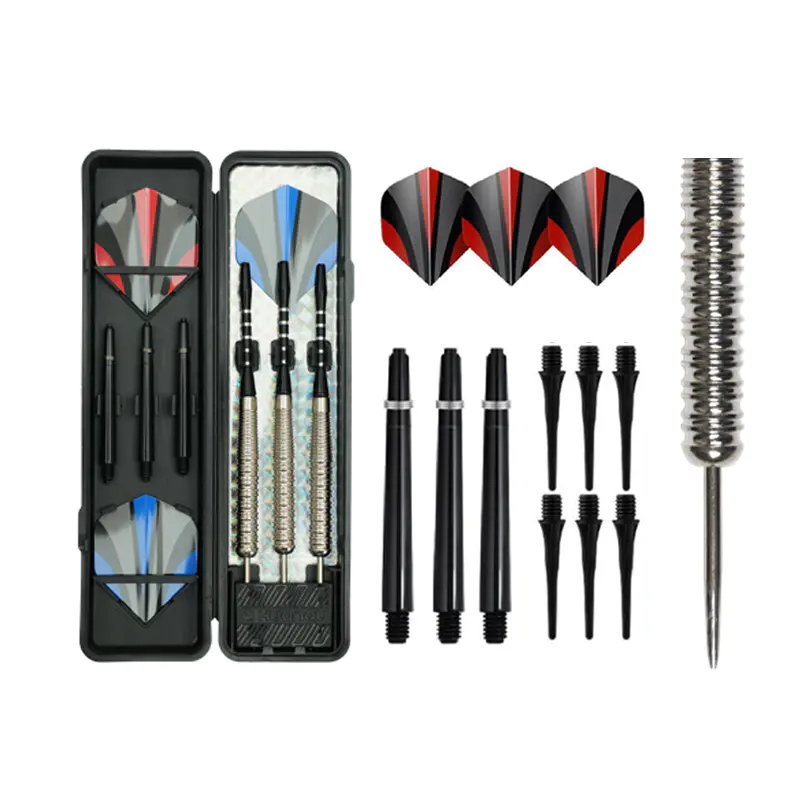


BL-1989 Precision Steel Tip Darts with Complete Accessory Kit
-
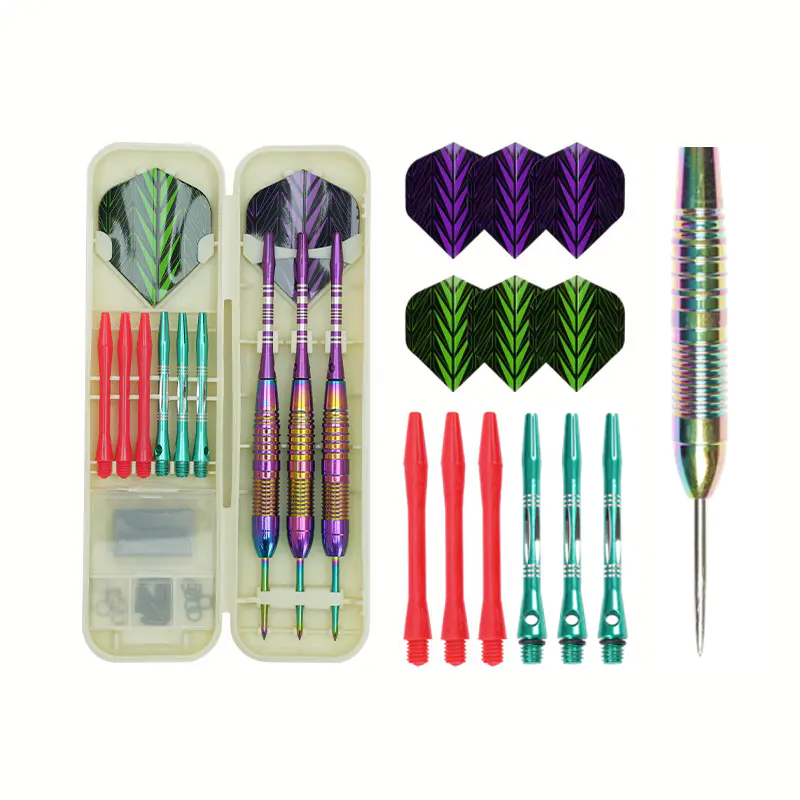
BL-1716 23g Color Stainless Steel Steel Tip Darts Gift Box Set
-
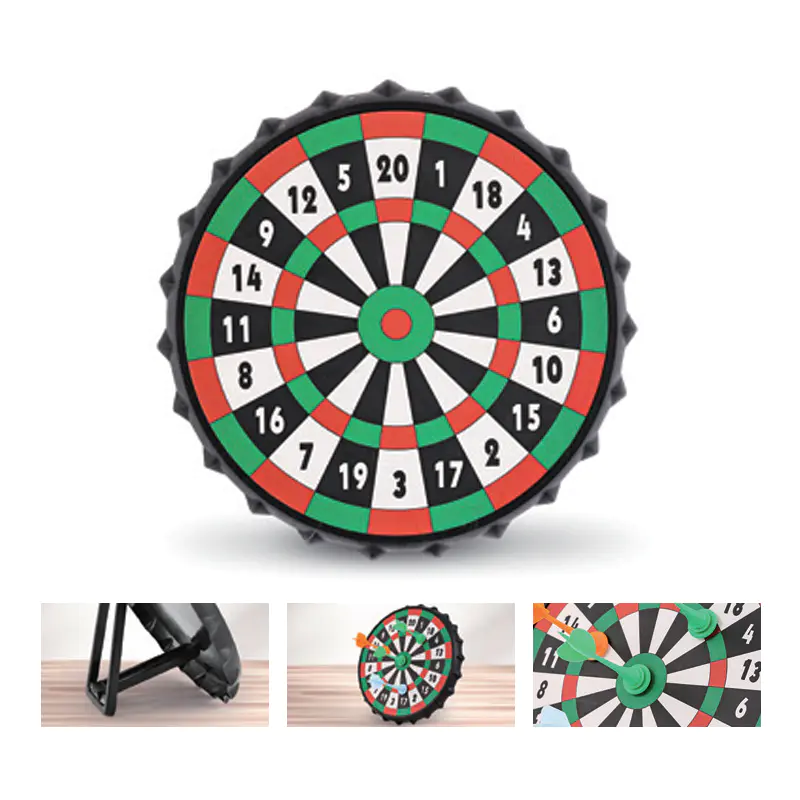
BL-701 Baili Desktop Dartboard Set with Soft Tip or Steel Tip Darts
-
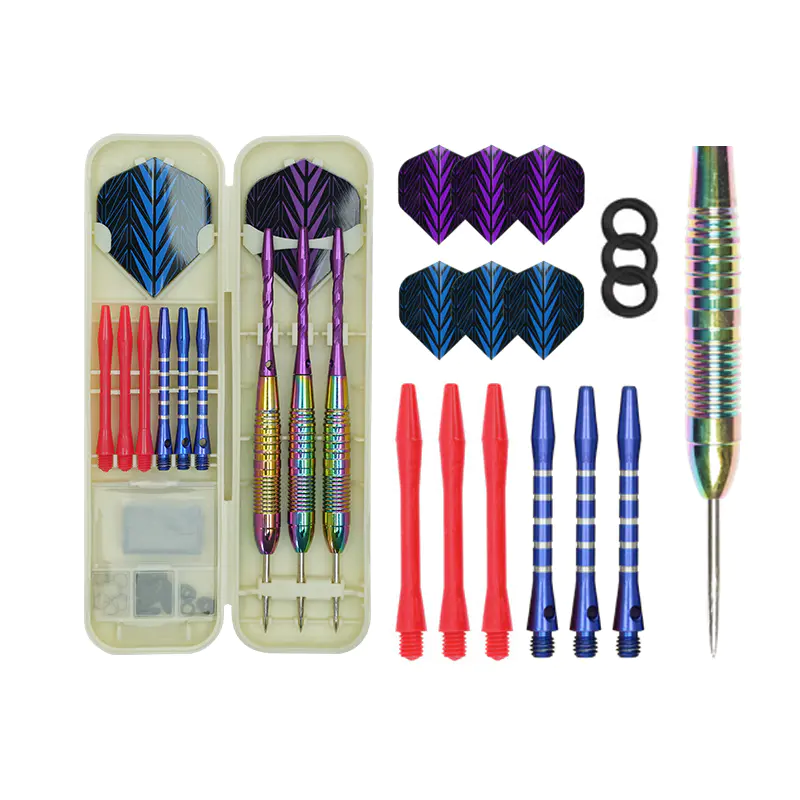
BL-1539 22g Color Stainless Steel Steel Tip Darts Set
-
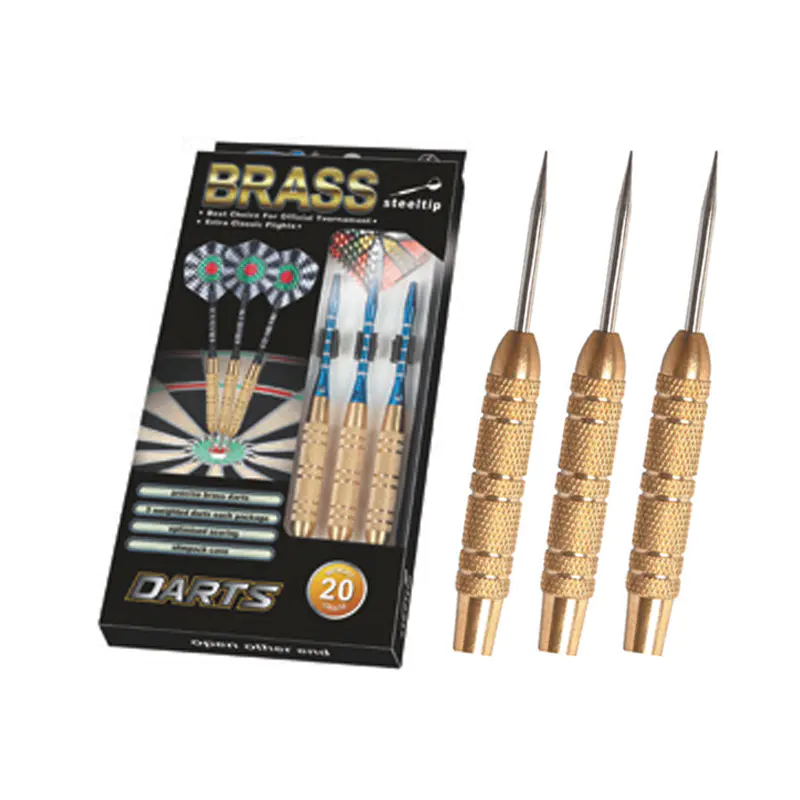
BL-3300 Professional Brass Steel Tip Darts Set with 20g Needle
-
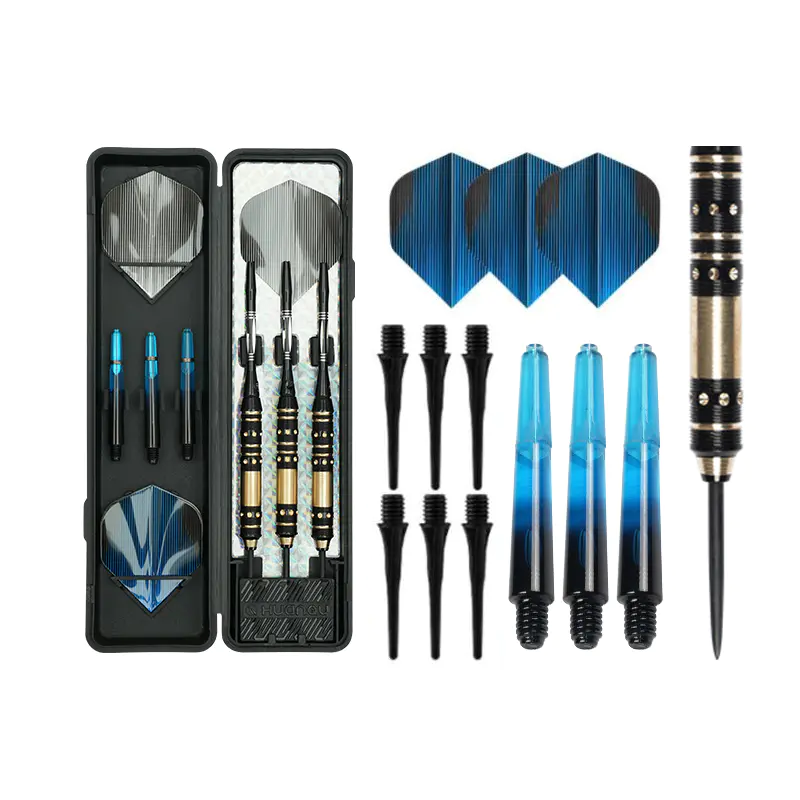
BL-1544 Professional 20g Engraved Copper Steel Tip Dart Set
-

alysa@yilisports.cn
-

+86-15355379817
-

No. 22, Suhe Road, Yibei Industrial Zone, Yiwu City, Zhejiang Province, China
Copyright © 2026 by Yiwu Yili Sports Sports Goods Co., Ltd. Rights Reserved.
