 English
 Français
 Español
 Deutsch

How a Professional Bristle Dartboard Supports Custom Branding, Reliable Play, and Efficient B2B Supply
The professional dartboard market continues to develop as retailers, entertainment venues, sports clubs, promotional companies, and private-label brands look for products that combine dependable playing performance with strong commercial flexibility. A dartboard is no longer viewed only as a recreational accessory. For many businesses, it is also a branded product, a tournament component, a membership reward, a corporate gift, a promotional display, or part of a complete entertainment concept.
The Professional Blue Series Bristle Dartboard with Special Printing Design is developed for customers that need more than a standard off-the-shelf board. It combines a traditional bristle dartboard structure with a customizable printed surface, practical packaging options, and production support suitable for international B2B projects. The product is designed to serve wholesalers, importers, distributors, retail chains, sports product brands, promotional suppliers, pubs, clubs, and event organizers.
Its 18-inch size and 1.5-inch thickness provide a familiar format for training, recreational play, and venue installation. At the same time, the special printing process allows artwork, brand colors, logos, campaign graphics, and other visual elements to be integrated into the board design. This creates an opportunity for buyers to develop a product that is visually differentiated rather than competing only on price.
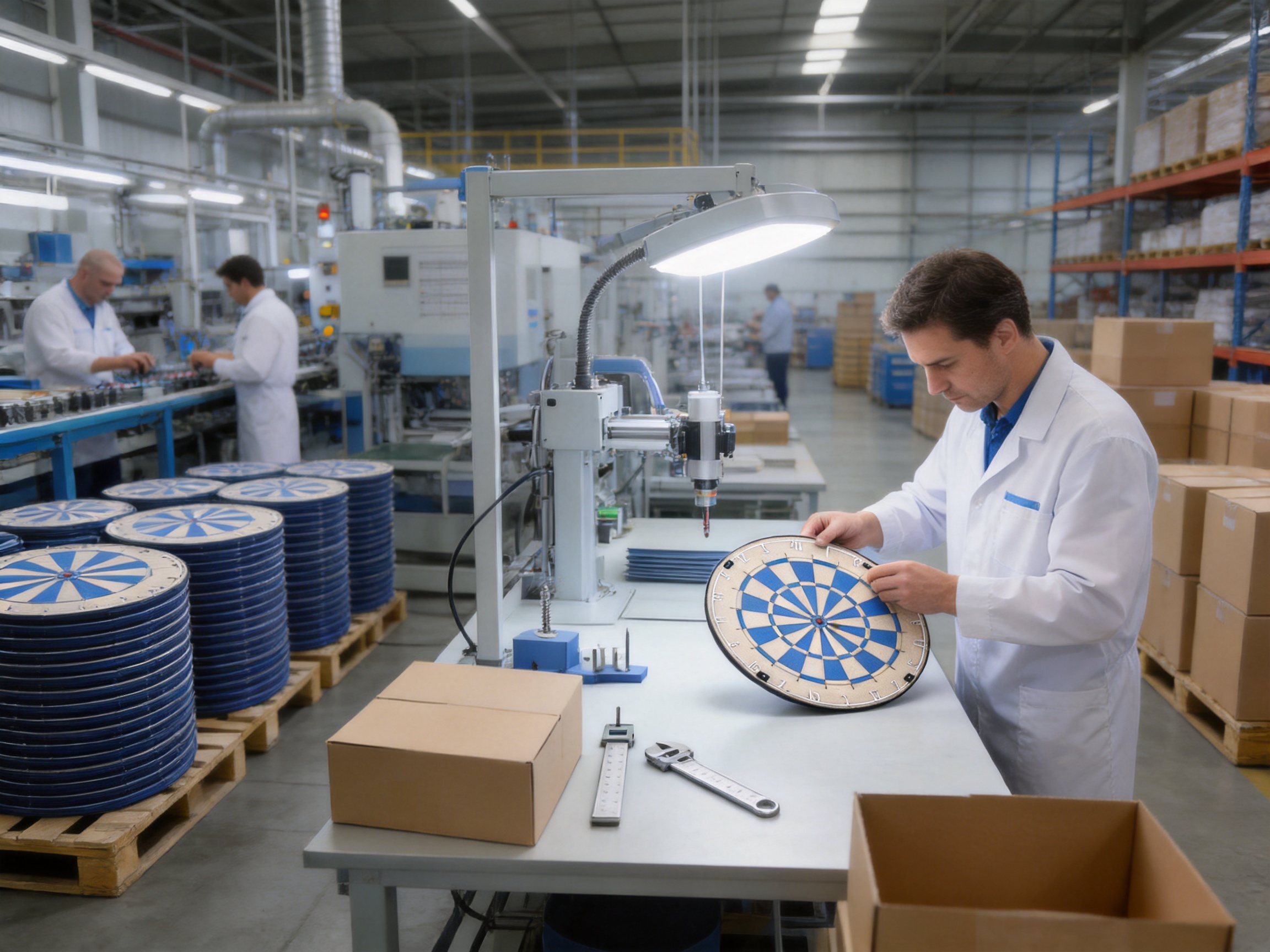
Behind the product is Yiwu Yili Sports Goods Co., Ltd., a specialized manufacturer focused on dartboards, darts, dart accessories, and related sporting products. The company operates a structured production system that includes component processing, assembly, packaging, warehousing, quality control, automation, and export support. Its long-term concentration on the dart category provides product-specific experience that can be valuable to buyers seeking consistent supply and practical customization.
1. Product Overview
The Professional Blue Series Bristle Dartboard is positioned as a professional-style product for commercial and organized use. Its blue visual identity gives it a distinctive appearance, while the special printing design allows the surface to be adapted for different business requirements. The board can be produced for a specific brand, event, campaign, store concept, sports organization, or customer segment.
The bristle construction is intended for repeated dart use. Compared with basic entry-level boards, a professional-style bristle board generally provides a more structured playing surface and a more appropriate appearance for clubs, pubs, training areas, and retail presentation. The construction is suitable for players who want a durable board for regular practice and for businesses that need a product capable of supporting repeated customer interaction.
The board is supplied in an 18-inch by 1.5-inch format. This size is widely recognized in the recreational and training dartboard market and can fit many standard game rooms, entertainment areas, club spaces, and home installations. The thickness contributes to the board’s substantial feel and supports its positioning as a professional-oriented product rather than a lightweight novelty item.
The most notable commercial feature is the special printing design. The printing process enables buyers to select a visual direction that is consistent with their market positioning. A distributor may request a private-label appearance, a promotional supplier may create an event-specific graphic, and a sports venue may use a design that reflects its own identity. This flexibility helps transform the same core product concept into several differentiated product lines.
Customization may include color schemes, brand elements, campaign graphics, decorative layouts, and other approved artwork. Buyers can also discuss matching dart configurations, accessory combinations, retail packaging, and project-specific presentation requirements. These options allow the dartboard to be developed as part of a complete sales or promotional package instead of being treated as an isolated item.
2. Why Bristle Construction Matters
Bristle dartboards remain popular because they are associated with repeated play, organized practice, and traditional dartboard performance. A bristle surface is designed to receive darts and support regular use across a broad range of environments. For a commercial buyer, the material choice is important because product durability influences customer satisfaction, replacement frequency, venue operating costs, and the perceived value of the merchandise.
A suitable bristle board should provide a consistent target surface and a practical balance between playability, durability, and cost. This product is designed around those commercial priorities. Its construction is intended for frequent use in locations such as pubs, sports bars, dart clubs, entertainment centers, school activity areas, company recreation rooms, and game rooms.
In a retail setting, the professional appearance of a bristle board can also influence purchasing decisions. Customers often compare surface quality, visual presentation, thickness, included accessories, and packaging before selecting a product. A well-presented bristle dartboard can therefore appeal to both experienced players and consumers who want to create a dedicated recreational space at home.
For distributors, the product category offers several sales opportunities. The same board can be promoted as a training product, a venue product, a corporate gift, a branded event item, or a recreational retail product. Its usefulness across multiple channels helps reduce dependence on a single customer segment.
Advantages of Bristle Dartboards for Commercial Use
One advantage is suitability for repeated play. A board used in a club or pub may receive substantially more use than a product installed in a private home. A professional-oriented bristle construction is better aligned with this environment than a purely decorative or lightweight board.
A second advantage is market familiarity. Many dart players recognize bristle dartboards as a standard format for training and recreational practice. This familiarity can reduce the need for extensive product education and allow retailers to communicate the product’s purpose clearly.
A third advantage is design flexibility. Because the product supports special printing, it can be adapted for branding and promotional programs. The visual surface becomes an additional commercial feature rather than merely a functional background.
A fourth advantage is packaging adaptability. Buyers can discuss different accessory sets, dart configurations, and packaging solutions. This is useful for retailers that need a product suitable for a particular price level, shelf format, market, or promotional campaign.
3. Special Printing for Brand and Campaign Differentiation
In a competitive sporting goods market, appearance has a direct effect on product recognition. Standard dartboards may perform their basic function, but they can be difficult to distinguish when displayed beside similar products. A special printing design gives buyers the opportunity to establish a recognizable visual identity and create a stronger connection between the board and the purchasing organization.
For private-label customers, the printed surface can support a broader branding program. Brand colors can be carried across the board, packaging, darts, accessories, and retail displays. The result is a more coordinated product family that can look purposeful and professional in a store or online catalog.
For promotional suppliers, customized printing can connect the dartboard to a particular campaign. A company may use the product for a product launch, anniversary program, sporting event, employee engagement activity, or customer loyalty initiative. The board can become both a functional gift and a long-lasting reminder of the campaign.
For event organizers, the design can be adapted for tournaments, exhibitions, club activities, and community programs. A dartboard carrying event-related graphics can serve as an award, souvenir, participant gift, or branded activity item. Its practical use after the event can extend the visibility of the organization or sponsor.
For sports bars and entertainment venues, custom printing can reinforce the atmosphere of the venue. A board can be matched to the interior color scheme or used to identify a designated playing area. Multiple boards with a consistent visual design can also create a more organized appearance in a club or tournament room.
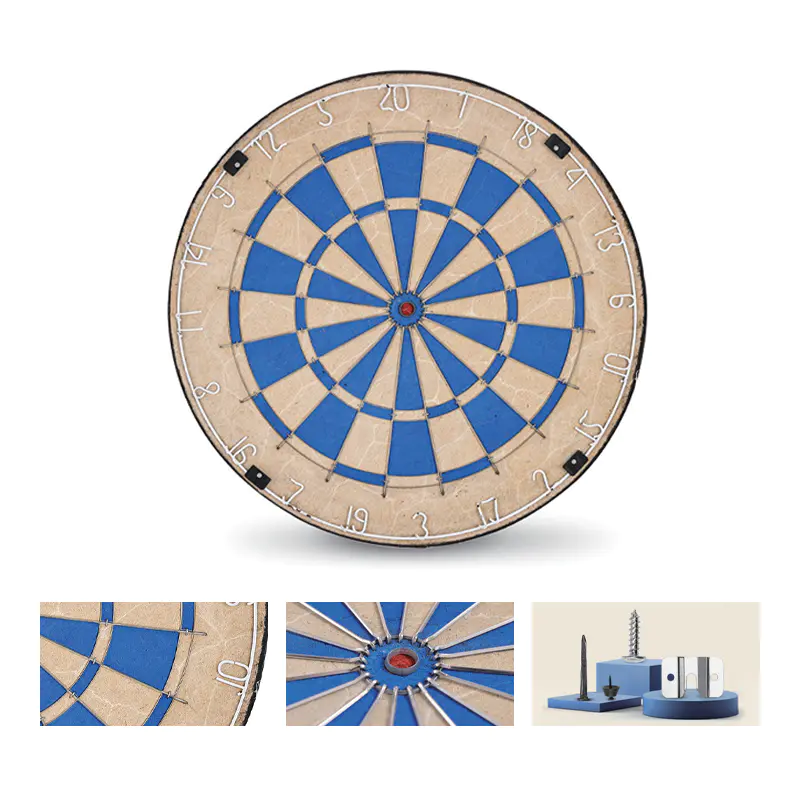
Professional Blue Series Bristle Dartboard with Special Printing Design
4. Product Specifications and Commercial Configuration
The available product information provides a clear starting point for purchase planning. The standard board size is 18 inches by 1.5 inches. The packing quantity is four sets, with a stated packing measurement of 47 by 21 by 71 centimeters. The listed net and gross weight figures are 22 and 21 kilograms as provided in the product information.
Because commercial orders may involve different accessory combinations or packaging structures, buyers should confirm the final packing configuration before production. The exact carton arrangement, included darts, accessory quantity, label requirements, and retail presentation can be reviewed during project development.
| Item | Available Information | Commercial Relevance |
|---|---|---|
| Product type | Professional bristle dartboard | Suitable for training, recreational play, venues, promotions, and retail programs |
| Series appearance | Blue Series with special printing design | Provides a distinctive visual identity and supports customized artwork |
| Board size | 18 inches by 1.5 inches | Appropriate for standard game rooms, clubs, venues, and home installations |
| Packing quantity | Four sets | Useful for shipment planning, wholesale purchasing, and carton calculation |
| Packing rate | 47 × 21 × 71 centimeters | Supports logistics planning and warehouse space estimation |
| Listed weight information | 22/21 kilograms net and gross weight figures | Provides a reference for freight and handling discussions |
| Customization options | Artwork, branding, colors, accessories, darts, and packaging | Allows the product to be adapted for private-label and promotional projects |
The table summarizes the product information currently available. For a finalized commercial quotation, customers should provide target quantity, destination, artwork requirements, packaging specifications, preferred accessories, and any testing or labeling requirements. Confirming these details at the beginning helps reduce changes later in the production process.
5. Applications Across Multiple Business Channels
Pubs and Sports Bars
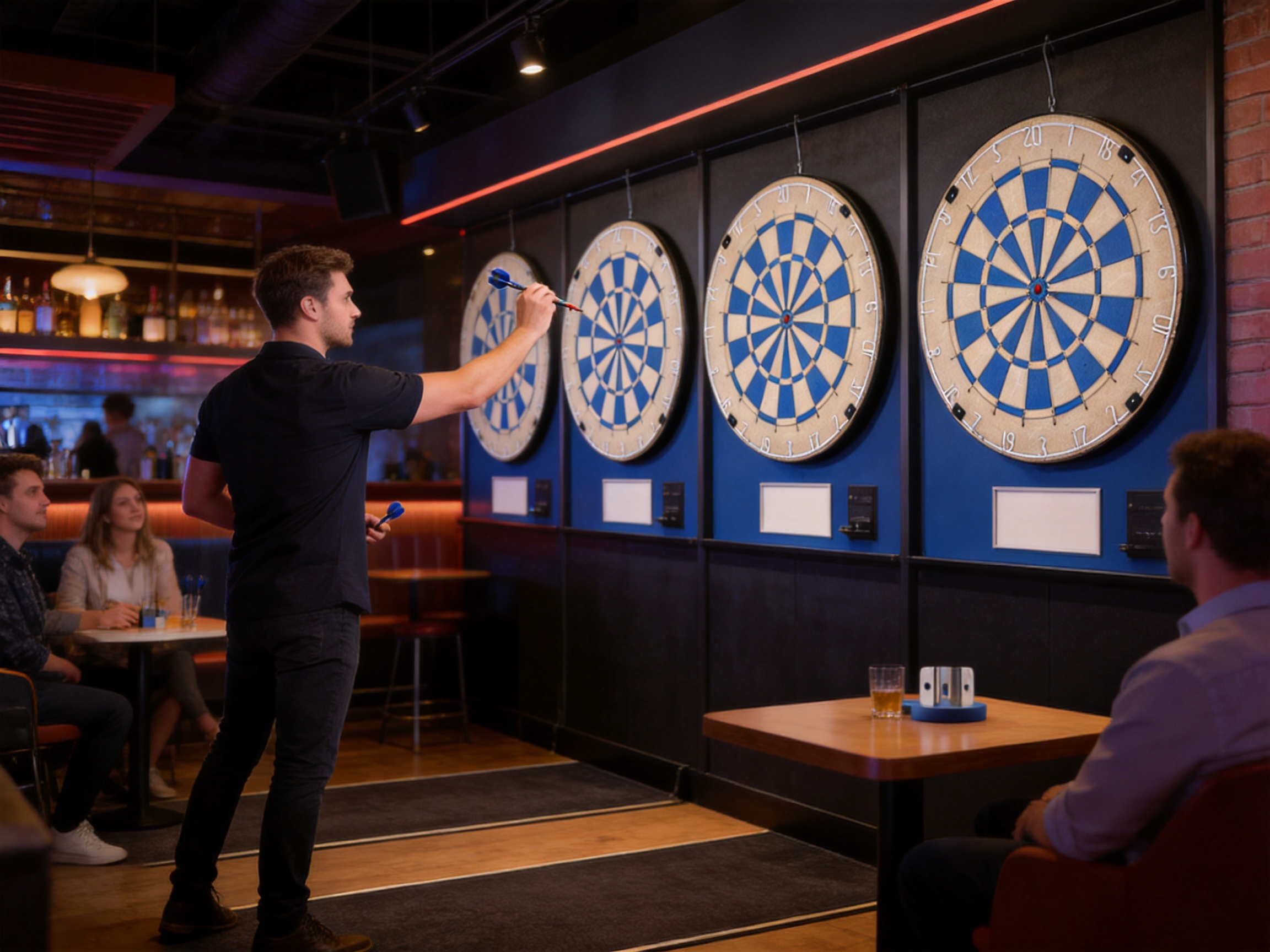
Pubs and sports bars often require products that can support regular customer use while contributing to the atmosphere of the venue. A professional-style bristle dartboard can be installed in a dedicated playing area, used for informal games, or incorporated into league and tournament activities. A customized printing design can help the board match the venue’s name, colors, or interior concept.
For multi-location hospitality groups, consistent board design can help create a unified customer experience. Boards produced with the same artwork can be installed across several venues, while regional or event-specific versions can be created when needed.
Dart Clubs and Training Centers
Dart clubs need products that are appropriate for repeated practice and organized play. A professional bristle dartboard can be used in training rooms, league areas, beginner instruction spaces, and club competitions. Special printing also gives clubs the option to display their own identity or recognize sponsors.
Training centers may order multiple boards with matching designs. This can improve the visual organization of the facility and create an appearance that is more suitable for coaching, exhibitions, and tournament preparation.
Entertainment Centers and Game Rooms
Entertainment centers often combine several activities, such as billiards, table games, arcade products, and darts. A visually distinctive dartboard can help the dart area attract attention and communicate that it is a planned part of the entertainment offering.
In private game rooms, consumers may prefer a board that looks more substantial and professional than a basic recreational product. The blue series appearance and custom printing options can appeal to buyers who want their game room to have a coordinated theme.
Schools and Company Recreation Areas
Schools, colleges, and company recreation areas can use dartboards for supervised activities, social events, employee engagement, and community programs. Custom designs may incorporate school colors, department identities, company branding, or special event graphics.
For these buyers, packaging and accessory selection can be tailored to the intended use. A project may require a complete set for immediate installation or several boards for a larger activity area. Product configuration should be determined according to the age group, supervision policy, venue layout, and program objectives.
Promotional Campaigns and Corporate Gifts
A customized dartboard can provide more long-term utility than many disposable promotional items. It can be displayed, used, and shared by customers or employees. This makes it suitable for corporate gifts, membership rewards, distributor incentives, product launches, and customer appreciation programs.
The product can be paired with branded darts, a customized box, an instruction insert, or a campaign-specific presentation. A coordinated set can increase the perceived value of the gift and make it easier for the recipient to understand the product’s intended use.
Retail and Wholesale Distribution
Retailers and wholesalers may use the product in several market segments. It can be offered as an intermediate or professional-oriented board, a private-label item, a club supply product, or a seasonal gift. The ability to adjust the design and packaging helps buyers create different versions for separate sales channels.
For distributors, a manufacturer with experience across dartboards, darts, accessories, and packaging can simplify sourcing. Instead of coordinating unrelated suppliers for every component, buyers may discuss a broader project with one specialized production partner.
6. Competitive Advantages in the Dartboard Market
The product’s advantages should be understood in relation to the needs of professional buyers. It is not positioned only as a standard board with a different color. Its value comes from the combination of a professional-style bristle structure, special printing capability, flexible configuration, and support from a manufacturer dedicated to the dart category.
Professional-Oriented Product Positioning
The 18-inch by 1.5-inch format gives the board a substantial specification for training and recreational use. This helps distinguish it from thin, lightweight, or purely decorative products. Buyers can present it to customers who want a board for regular play rather than occasional novelty use.
Visual Differentiation
Many standard products compete with similar colors, layouts, and packaging. Special printing makes it possible to build a more recognizable product. A distributor can use the printed design to target a specific region, retail program, club network, or promotional campaign.
Flexible Project Development
The product can be discussed as a project rather than a fixed catalog item. Artwork, brand elements, color schemes, accessories, darts, and packaging can be reviewed according to the customer’s goals. This flexibility is especially useful for private-label buyers and organizations ordering for events.
Category-Specific Manufacturing Experience
A manufacturer focused on darts and dartboards is more likely to understand the practical details of board construction, dart assembly, accessory matching, packaging, and product consistency. Category specialization can help reduce communication gaps that may occur when a general sporting goods factory produces a dartboard as only one of many unrelated items.
Support for International B2B Orders
The company exports products to Europe, North America, and the Middle East and serves brand owners, retail chains, and distributors. Experience with international customers can support communication about packaging, production schedules, documentation, shipment preparation, and quality expectations.
Scalable Production Structure
The company’s approximately 25,000-square-meter operational facility includes areas for component processing, assembly, packaging, and warehousing. A structured facility can help support both repeat orders and project-based production. It also enables different stages of manufacturing to be coordinated within an organized workflow.
7. Advanced Manufacturing Capabilities
The performance of a customized dartboard depends not only on the design shown in a catalog but also on the manufacturing process behind it. Consistency in materials, dimensions, assembly, printing, packaging, and inspection affects the final product received by the customer. Yiwu Yili Sports Goods Co., Ltd. has developed its production system around these requirements.
The company’s facility includes dedicated areas for component processing, assembly, packaging, and warehousing. Separating these activities into organized production zones helps create a more predictable workflow. Materials can move through defined stages, while finished products can be prepared for shipment in a controlled environment.
A newly constructed production facility further supports long-term capacity planning. For B2B customers, capacity is important because an initial order may develop into repeat business, seasonal replenishment, or a multi-market supply program. A manufacturing partner should be able to plan beyond one shipment and maintain a stable production structure as demand changes.
Automation and Equipment Development
Continuous investment in automation and proprietary equipment development is a central part of the company’s manufacturing approach. Automated production lines can improve efficiency and reduce variation in repetitive operations. They also help support more consistent output when order volumes increase.
Automation is particularly useful when products must be produced in large quantities with consistent dimensions, assembly quality, and appearance. While skilled personnel remain important for supervision and quality decisions, equipment-assisted production can reduce the effects of manual inconsistency.
The company introduced multiple automated production lines through independent research and development in 2023. This development reflects an effort to improve production efficiency through internally developed solutions rather than relying only on standard external equipment. For customers, this may contribute to more stable lead-time planning and more consistent large-volume manufacturing.
Component Processing and Assembly
Dartboards are made from multiple elements that must work together as a finished product. The board body, surface, printed design, structural parts, labels, accessories, and packaging all influence the customer’s experience. A coordinated manufacturing system helps these elements remain aligned throughout production.
Component processing provides a foundation for dimensional accuracy and material preparation. Assembly then brings the components together according to defined procedures. Consistent assembly is important for the board’s appearance, thickness, stability, and packaging fit.
For customized products, the assembly process must also account for artwork and product identity. A printing design that is correct in isolation can still create problems if it is not aligned properly with the finished board. Production coordination helps ensure that visual and structural requirements are considered together.
Packaging and Warehousing
Packaging is an important part of B2B product development. It protects the board during transport, supports retail presentation, and communicates product information to the end customer. It also affects carton efficiency, storage requirements, shipping cost, and handling procedures.
The company maintains dedicated packaging and warehousing areas, allowing finished products to be organized before shipment. Buyers can discuss packaging structures that match their sales channel, including retail-ready presentation, private-label information, project-specific inserts, or multi-unit cartons.
For distributors, appropriate warehouse preparation can help reduce confusion during shipment. Products with different artwork, accessories, or customer labels should be clearly identified so that orders can be checked and dispatched accurately.
8. Quality Control and Production Consistency
Quality control is essential when a product is intended for repeated use and international distribution. A quality issue can affect not only the individual board but also the buyer’s brand reputation, customer reviews, retail relationships, and future orders. For this reason, the manufacturer maintains an independent quality control department.
The QC department oversees raw material inspection, in-process monitoring, and finished product testing. These stages provide several opportunities to identify problems before the product reaches the customer.
Raw Material Inspection
Raw material inspection helps confirm that incoming materials meet the requirements defined for production. This may include checking material condition, appearance, dimensions, and other applicable characteristics. Early inspection is valuable because it prevents unsuitable materials from moving through later stages.
In-Process Monitoring
In-process monitoring evaluates the product while it is being manufactured. This allows the production team to identify deviations in assembly, appearance, printing, or dimensions before a complete order is finished. Correcting an issue during production is generally more efficient than discovering it after packing.
Finished Product Testing
Finished product testing helps verify that completed goods meet defined standards for size, weight, and appearance. For a customized product, appearance inspection is particularly important because printed artwork, colors, markings, and surface presentation form part of the customer’s brand identity.
Inspection procedures can also support order consistency. When several production batches are made for the same customer, standard checks help reduce differences between batches and provide greater confidence for repeat purchasing.
Why QC Matters to Private-Label Buyers
Private-label customers place their own identity on the product, so manufacturing quality directly affects their market position. A board with inconsistent printing, poor packaging, or visible assembly problems can weaken the value of the brand. An organized QC system helps protect the customer’s investment in artwork, packaging, promotion, and distribution.
Quality expectations should be confirmed during project planning. Buyers may need to provide approved artwork, color references, packaging layouts, labeling requirements, sample approval procedures, and inspection criteria. Clear communication allows the manufacturer and customer to work from the same standards.
9. Company Experience and Industry Focus
Yiwu Yili Sports Goods Co., Ltd. was founded in 1993 and has developed long-term experience in dart manufacturing. The company established an overseas sales network in 1995 and built a new factory in 2001. Its sisal dartboard production line was launched in 2017, followed by the introduction of multiple automated production lines through independent research and development in 2023. The company expanded into a new production facility in 2024 and has also been designated as a standard-setting enterprise for dart production.
This history demonstrates a continuing focus on the dart category rather than a short-term approach to product sourcing. Long-term specialization can support product knowledge, production learning, process improvement, and more informed communication with professional buyers.
The company’s product focus includes sisal dartboards, flocked dartboards, magnetic safety structures, dart assembly, and retail-ready product packaging. This range allows the manufacturer to understand several related areas of the dart market and to support buyers with different product strategies.
For customers seeking a complete program, this category concentration can be useful. A buyer may need a professional bristle board, a set of darts, spare accessories, retail packaging, and customized artwork. Working with a supplier that already operates across these related categories can make the development process more efficient.
10. Designing a Successful Custom Dartboard Project
A successful customized dartboard project begins with a clear definition of the intended market. The same board may require different packaging, accessories, colors, and sales messaging depending on whether it is intended for a retail chain, a sports club, a corporate campaign, or a hospitality venue.
Define the Target Customer
Buyers should first identify who will use or receive the product. A board for experienced players may require a more professional presentation and accessory configuration. A promotional gift may focus more heavily on branding and packaging. A school or company recreation project may emphasize complete sets and ease of use.
Establish the Visual Identity
The customer should prepare brand guidelines, preferred colors, logo files, artwork, and any required text. It is useful to define which elements are essential and which can be adjusted by the design or production team. Clear artwork information helps reduce revision cycles.
Choose Accessories and Darts
The board may be matched with different dart configurations and accessory sets. Selection should consider the intended user, target price, packaging size, and retail positioning. A complete package may include darts and practical accessories so that the customer can begin playing immediately after opening the product.
Plan the Packaging
Packaging should protect the board while also supporting the product’s commercial purpose. Retail packaging may require barcodes, product descriptions, multilingual information, warning statements, and hanging or shelf presentation. Promotional packaging may require campaign graphics, gift presentation, or special inserts.
Confirm Production and Inspection Requirements
Before mass production, the buyer and manufacturer should agree on specifications, artwork approval, sample requirements, packing details, inspection criteria, and shipment documentation. These agreements create a reference point for production and help prevent misunderstandings.
11. Logistics and B2B Supply Considerations
International buyers should evaluate more than the unit price when selecting a dartboard supplier. Total procurement value also depends on product consistency, packaging efficiency, communication, customization capability, lead-time planning, quality control, and the supplier’s ability to support future orders.
The provided packing rate of 47 by 21 by 71 centimeters and the four-set packing quantity offer a reference for logistics planning. Buyers can use this information to estimate warehouse space, carton handling, container loading, and freight requirements. Final dimensions should be reconfirmed if the accessory set, packaging structure, or product configuration changes.
Weight information is also important for transport planning. The product information lists net and gross weight figures of 22 and 21 kilograms. Because the order configuration can affect final weight, customers should verify the final packing data before shipment booking and freight calculation.
For repeat programs, buyers may benefit from establishing a rolling forecast. A forecast can help the manufacturer prepare materials, allocate production capacity, and coordinate packaging requirements. It can also help the buyer maintain inventory during seasonal demand or promotional periods.
Clear labeling is especially important when a buyer orders multiple designs. Different brand versions, artwork variations, accessory configurations, or destination markets should be identified during packing. Accurate carton markings can help reduce warehouse errors and simplify distribution after arrival.
12. Sustainability and Efficient Resource Use
Although product performance and customization are the main priorities, manufacturing efficiency also has commercial and environmental importance. Automation can reduce unnecessary variation, improve production utilization, and help minimize rework. Better process control may also support more efficient use of materials and packaging.
Durable products can provide value over a longer period, which is relevant to both consumers and venues. A board designed for regular use may reduce the need for frequent replacement compared with a low-quality product that wears out quickly. For commercial customers, durability can support a more responsible purchasing decision as well as reduce operating inconvenience.
Packaging should be planned according to the requirements of protection, retail presentation, and transport efficiency. Excessive packaging may increase cost and storage volume, while insufficient packaging can increase the risk of damage. A project-specific packaging review helps balance these priorities.
13. Purchasing Recommendations for Importers and Distributors
Importers and distributors should request complete product information before placing an order. This includes board dimensions, thickness, packing quantity, carton dimensions, weight, included accessories, artwork requirements, production lead time, and available customization options.
It is advisable to confirm whether the product will be sold under the manufacturer’s standard presentation or under a private label. If private labeling is required, the buyer should provide brand files and specify where logos, colors, and product information should appear.
Buyers should also determine whether the product is intended for a single market or several regions. Packaging text, labeling, warnings, instructions, and product claims may need to be adapted for different destinations. Early planning can help avoid costly packaging revisions.
Sample approval is another important stage. A sample allows the buyer to evaluate appearance, artwork placement, board construction, accessory compatibility, packaging, and overall presentation. Once approved, the sample can serve as a production reference subject to the agreed specifications.
For large orders, buyers may consider a pre-shipment inspection or an agreed quality control procedure. The inspection standard should be specific enough to evaluate size, weight, surface appearance, printing, assembly, packaging, and quantity.
14. Frequently Asked Questions
What type of product is the Professional Blue Series Dartboard?
It is a professional-style bristle dartboard with a blue series appearance and special printing design. It is intended for training, recreational play, venues, clubs, promotional programs, retail sales, and private-label projects.
What is the board size?
The listed size is 18 inches by 1.5 inches. Customers should confirm final specifications when discussing a customized production order.
Can the dartboard carry a private label or custom artwork?
Yes. The special printing process supports customized artwork, brand elements, and color schemes. Buyers can discuss artwork requirements and approval procedures with the manufacturer.
Who can use this product?
The product is suitable for brands, distributors, wholesalers, sports product importers, promotional suppliers, event organizers, pubs, sports bars, dart clubs, entertainment centers, schools, companies, and retail businesses.
Can the accessories be customized?
Different accessory sets, dart configurations, and packaging solutions can be matched according to project requirements. The final selection should be confirmed based on the target market, price level, and intended use.
Is the product suitable for frequent use?
The bristle construction is designed to support repeated use in training and recreational environments. Suitability for a specific venue depends on usage intensity, installation conditions, maintenance, and operating practices.
What are the packaging details?
The listed packing quantity is four sets. The provided packing rate is 47 by 21 by 71 centimeters. Final packing details should be confirmed if the order includes customized accessories or revised retail packaging.
What quality control processes are used?
The company’s independent QC department oversees raw material inspection, in-process monitoring, and finished product testing. These procedures address defined standards for size, weight, appearance, and overall product consistency.
Does the manufacturer support international orders?
The company exports to Europe, North America, and the Middle East and serves brand owners, retail chains, and distributors. International buyers can discuss production, packaging, customization, and shipment requirements directly with the manufacturer.
Why work with a dart-specialized manufacturer?
A supplier focused on dartboards, darts, and accessories can provide category-specific knowledge across product construction, assembly, accessory matching, packaging, and quality control. This specialization may help simplify product development and improve communication.
Can the product be used as a corporate gift?
Yes. A customized dartboard can be developed as a corporate gift, event souvenir, membership reward, employee engagement item, or promotional product. Branding and packaging can be adapted to the purpose of the campaign.
What information should be provided when requesting a quotation?
Buyers should provide the desired quantity, destination, artwork requirements, preferred colors, packaging needs, accessory configuration, labeling requirements, target delivery schedule, and any inspection or compliance expectations.
15. Conclusion
The Professional Blue Series Bristle Dartboard with Special Printing Design offers a practical combination of professional-oriented construction, visual customization, and B2B production flexibility. Its 18-inch by 1.5-inch format is suitable for training, recreational play, clubs, venues, game rooms, promotional projects, and retail programs.
Its strongest commercial advantage is the ability to connect a functional dartboard with a specific brand, campaign, event, or market identity. Special printing can help distributors and private-label buyers create a product that is easier to recognize and more closely aligned with their commercial objectives. Flexible accessories, dart configurations, and packaging options further support project-based development.
The product is supported by a manufacturer with long-term experience in the dart industry, an approximately 25,000-square-meter operational facility, dedicated production areas, automation investment, independent equipment development, and an independent QC department. These capabilities provide a foundation for consistent manufacturing and international B2B supply.
For buyers searching for a dartboard manufacturer in China, the key value is not only the individual board but also the combination of product knowledge, customization capability, production organization, quality control, and category-focused support. With clear specifications and effective communication, this product can serve as a dependable platform for retail, venue, promotional, private-label, and event-related dartboard programs.
References
1. Product specification sheet for the Professional Blue Series Bristle Dartboard with Special Printing Design.
2. Manufacturing information supplied by Yiwu Yili Sports Goods Co., Ltd.
3. International standards and common practices for recreational and professional-style dartboard construction.
4. General principles of private-label sporting goods development and promotional product packaging.
5. General quality management practices for raw material inspection, in-process monitoring, and finished product evaluation.
Product: Professional Blue Series Bristle Dartboard with Special Printing Design

Recommended Products
-
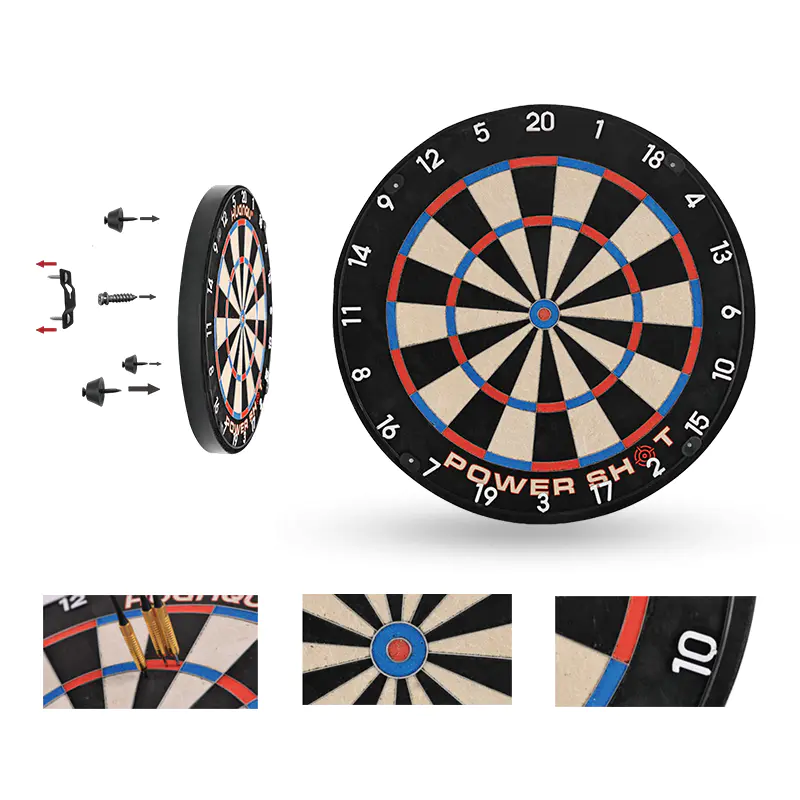


BL-1817 Professional Tournament Bristle Dartboard Set with Round Wire Spider
-
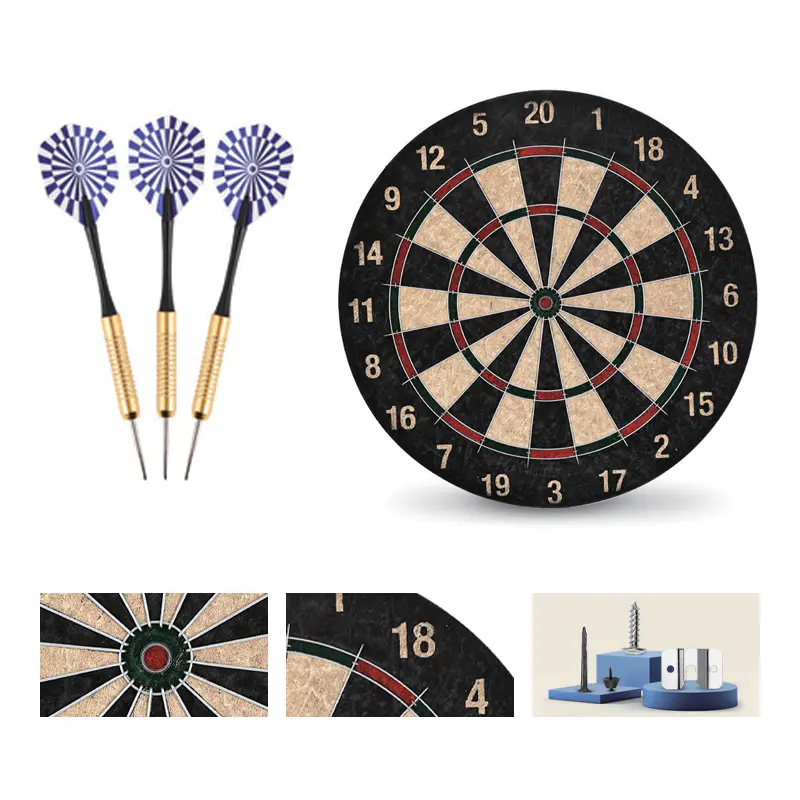
BL-1819 18 inch Bristle Dartboard with Printed Number Ring and Darts
-
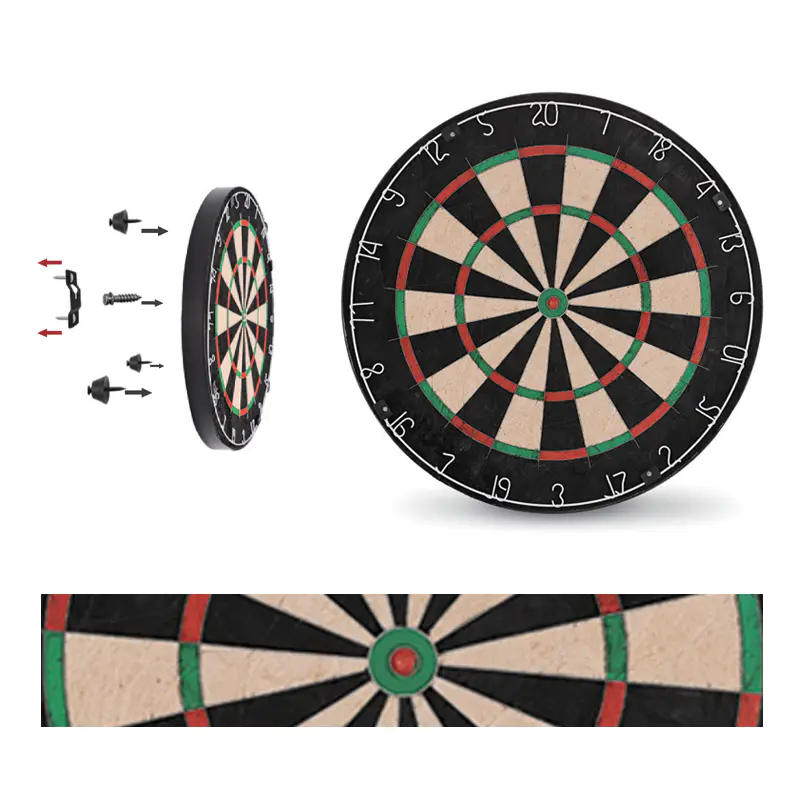
BL-1818A Professional 18 inch Bristle Dartboard with Knife-Edge Wire
-
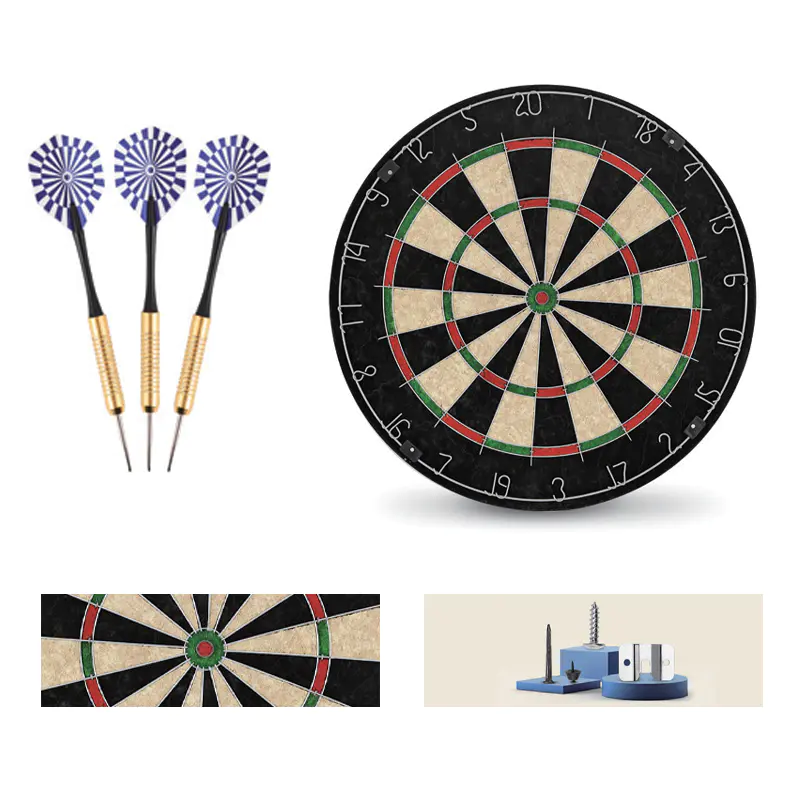
BL-1818B 18 inch Bristle Dartboard Set with Round Wire and Darts
-
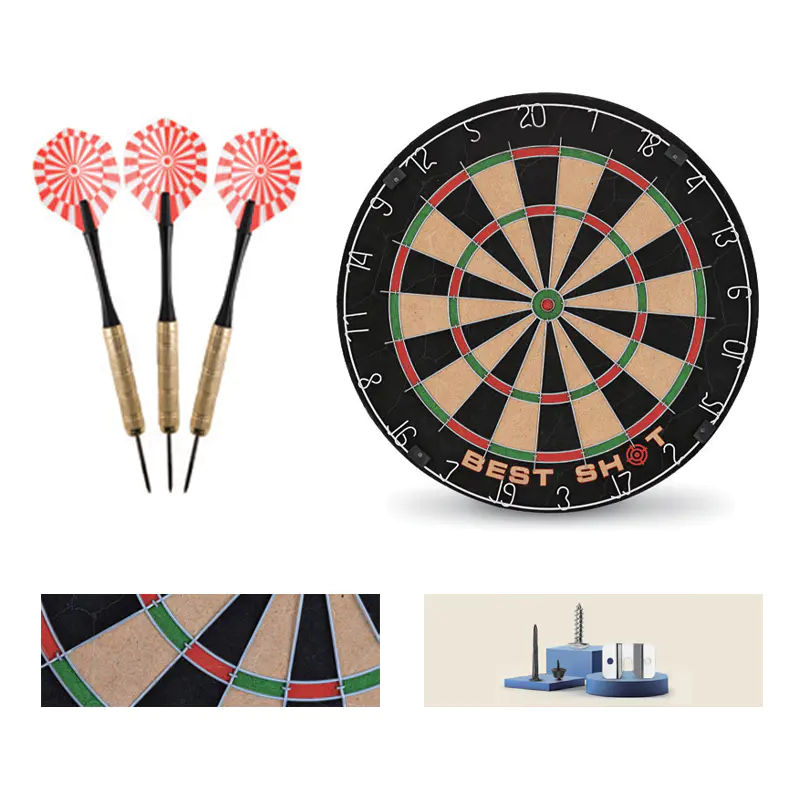
BL-1818C 18 inch Bristle Dartboard with Triangular Wire for Improved Durability
-
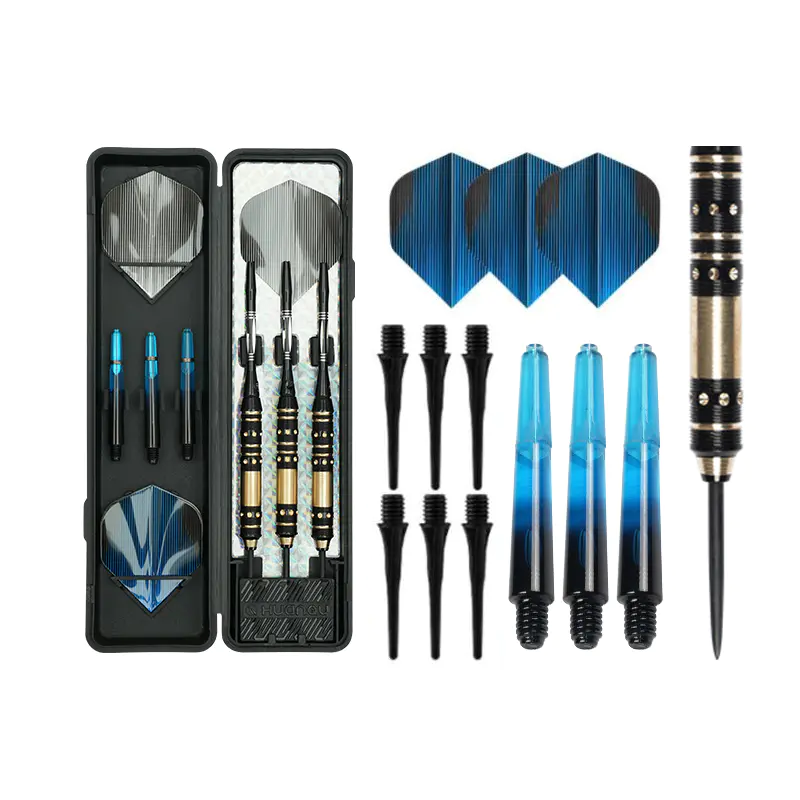
BL-1544 Professional 20g Engraved Copper Steel Tip Dart Set
-

alysa@yilisports.cn
-

+86-15355379817
-

No. 22, Suhe Road, Yibei Industrial Zone, Yiwu City, Zhejiang Province, China
Copyright © 2026 by Yiwu Yili Sports Sports Goods Co., Ltd. Rights Reserved.
