 English
 Français
 Español
 Deutsch

Aluminum Dart Shafts: Precision Components for Reliable Dart Assembly
Aluminum dart shafts are essential components in modern dart assembly. They connect the dart barrel to the flight, influence the balance of the completed dart, and contribute to the overall durability and appearance of the product. Although shafts are small compared with dartboards, cabinets, and complete dart sets, their construction has a direct effect on how a dart performs during repeated practice, competition, transportation, and retail use.
For wholesalers, distributors, sporting-goods retailers, and private-label brands, choosing the right shaft supplier is about more than selecting a material. It requires consideration of dimensional consistency, thread compatibility, surface quality, product presentation, quality control, production capacity, and the supplier’s ability to support repeat orders. An aluminum shaft must be manufactured with sufficient precision to fit securely, maintain a stable connection, and provide dependable service throughout the expected life of the dart.
Aluminum dart shafts offer a practical combination of strength, light weight, visual appeal, and manufacturing flexibility. Compared with many basic plastic shafts, aluminum versions can provide a more rigid connection between the barrel and flight. Compared with some heavier metal components, aluminum can help maintain a manageable overall dart weight while still delivering a premium appearance. These characteristics make aluminum shafts suitable for recreational darts, training sets, retail dart kits, custom assemblies, and branded product programs.
Yiwu Yili Sports Goods Co., Ltd. is a specialized manufacturer of dartboards, darts, and related sporting products. Its long-term concentration on the dart category provides a relevant manufacturing foundation for customers seeking components and complete dart solutions from one source. The company serves international brand owners, retail chains, wholesalers, and distributors, with production and export experience covering Europe, North America, and the Middle East.
This article examines the role, advantages, manufacturing requirements, quality considerations, and commercial applications of aluminum dart shafts. It also explains how a structured factory system, automated production equipment, independent quality control, and experience in dart manufacturing can support consistent supply for global B2B customers.
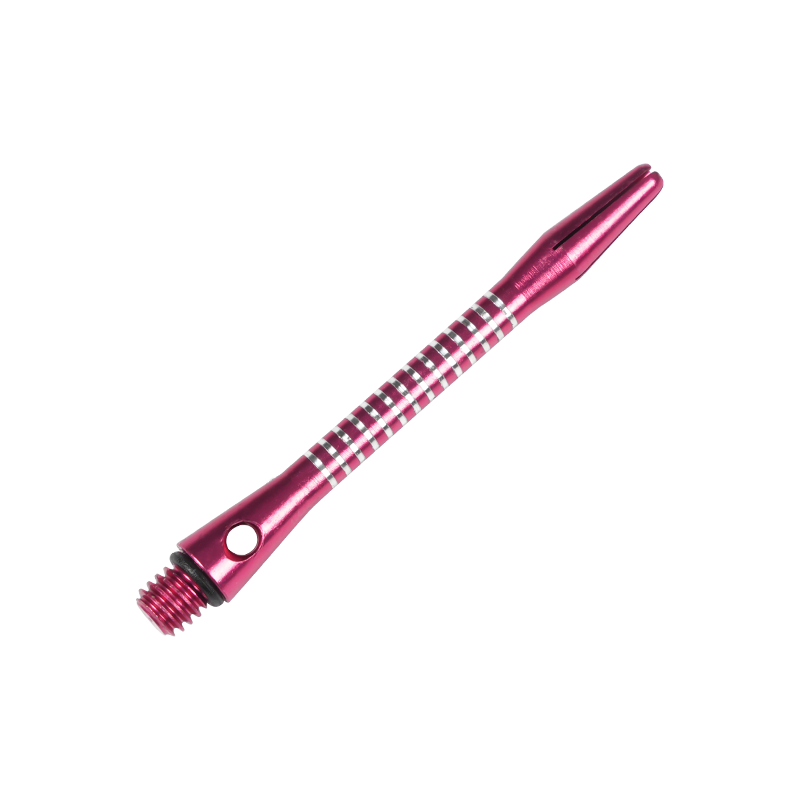
Aluminum Dart Shafts
Understanding the Role of an Aluminum Dart Shaft
A dart shaft, also known as a dart stem, is the connecting part positioned between the barrel and the flight. Its primary purpose is to hold the flight in place and maintain the intended relationship between the rear and front sections of the dart. The shaft therefore contributes to the dart’s physical balance, flight stability, and user experience.
When a player releases a dart, the barrel provides the main gripping area and forward mass, while the shaft and flight influence the rear section of the dart. A shaft that is too flexible, poorly fitted, or inconsistent in length may alter the behavior of the dart from one throw to another. A well-made aluminum shaft provides a firm structural connection and can support a more consistent assembly.
Aluminum is particularly suitable for dart shafts because it can be formed and machined with a balance of strength and low density. The material supports a clean, metallic appearance and allows manufacturers to create different surface treatments, lengths, colors, and visual finishes. It can also be incorporated into products designed for different levels of the market, from affordable retail sets to premium custom dart collections.
The shaft is a relatively small component, but it must work with several other parts. These include the barrel thread, the flight opening, the shaft collar or flight-retention area, and sometimes additional rings or locking accessories. A successful shaft design must therefore combine dimensional accuracy with practical usability. A visually attractive shaft that does not fit correctly is not suitable for professional or commercial distribution.
Main Advantages of Aluminum Dart Shafts
Firm and Rigid Construction
One of the primary advantages of aluminum dart shafts is their firm construction. Aluminum provides greater rigidity than many basic plastic shaft materials. This rigidity helps maintain the position of the flight during use and reduces unwanted bending at the connection between the barrel and the flight.
A rigid shaft may be particularly valuable for players who prefer a stable setup or who practice frequently. Repeated handling, removal of flights, transport in dart cases, and contact between darts can place stress on the shaft. A properly manufactured aluminum version is designed to withstand normal use while maintaining its basic shape and connection performance.
Rigid construction also benefits product presentation. When a dart is assembled for retail display, the shaft should maintain a straight and professional appearance. Consistent shafts help complete dart sets look uniform in packaging and reduce the risk of components appearing loose, bent, or poorly aligned.
Balanced Weight Characteristics
Aluminum provides a useful balance between strength and weight. It is generally lighter than many other structural metals while offering more rigidity than ordinary flexible plastics. This allows shaft designers to create a firm component without unnecessarily increasing the total weight of the dart.
The effect of a shaft’s weight depends on the complete dart configuration, including barrel weight, barrel shape, point, flight size, and shaft length. For this reason, aluminum shafts can be used in a variety of assemblies rather than being limited to one particular style of dart. They may suit players and brands that want a controlled, balanced product without adding excessive rear weight.
From a commercial perspective, a balanced material also supports product variety. The same basic manufacturing platform can be used to develop shafts in different lengths and finishes. This helps suppliers offer options for starter sets, practice products, premium darts, replacement packs, and customized brand collections.
Metallic Appearance and Premium Positioning
Aluminum has a naturally recognizable metallic appearance. Depending on the selected surface treatment, the finished shaft may appear smooth, polished, colored, satin-finished, or otherwise customized. This visual quality can help a product stand out in a crowded retail environment.
Appearance is especially important for dart accessories because customers often purchase components based on both performance and style. Color coordination between the shaft, flight, barrel, and packaging can support a strong product identity. Aluminum also creates opportunities for a more premium visual message than a plain, unmodified plastic component.
For private-label customers, surface appearance can be combined with packaging design, product photography, and brand-specific color systems. This enables the same general product category to be adapted for different market positions without changing the fundamental function of the shaft.
Compatibility with Replacement and Customization Programs
Dart players frequently replace flights and shafts as part of routine maintenance or personal customization. A reliable aluminum shaft can therefore be sold as a replacement accessory, a component of a complete dart set, or part of a customization program.
Retailers may offer shafts separately in different lengths or colors, while dart brands may include them in multi-component kits. Wholesalers can also combine shafts with flights, barrels, cases, points, and other accessories to create product bundles. This flexibility increases the commercial usefulness of aluminum shafts beyond their role in a single finished dart.
For B2B buyers, a supplier capable of supporting multiple accessory categories can simplify procurement. Instead of coordinating unrelated suppliers for dartboards, darts, shafts, flights, and packaging, customers may be able to plan a broader product range through one experienced manufacturer.
Practical Durability for Repeated Use
Durability is one of the most important purchasing considerations for dart accessories. Shafts are exposed to repeated assembly, removal, flight replacement, contact with other darts, and storage in cases or packaging. Aluminum is well suited to products where a firm, reusable connection is required.
Durability does not mean that an aluminum shaft is indestructible. Any dart component can be damaged by excessive impact, improper handling, cross-threading, or use outside its intended conditions. However, accurate manufacturing and appropriate material selection can help the shaft resist ordinary stresses and retain its functional form during normal use.
For retailers and distributors, dependable durability can reduce customer complaints and support stronger product reviews. For brands, it can help protect the perceived quality of the complete dart set. For players, it can reduce the need for frequent replacement and provide greater confidence in the assembled dart.
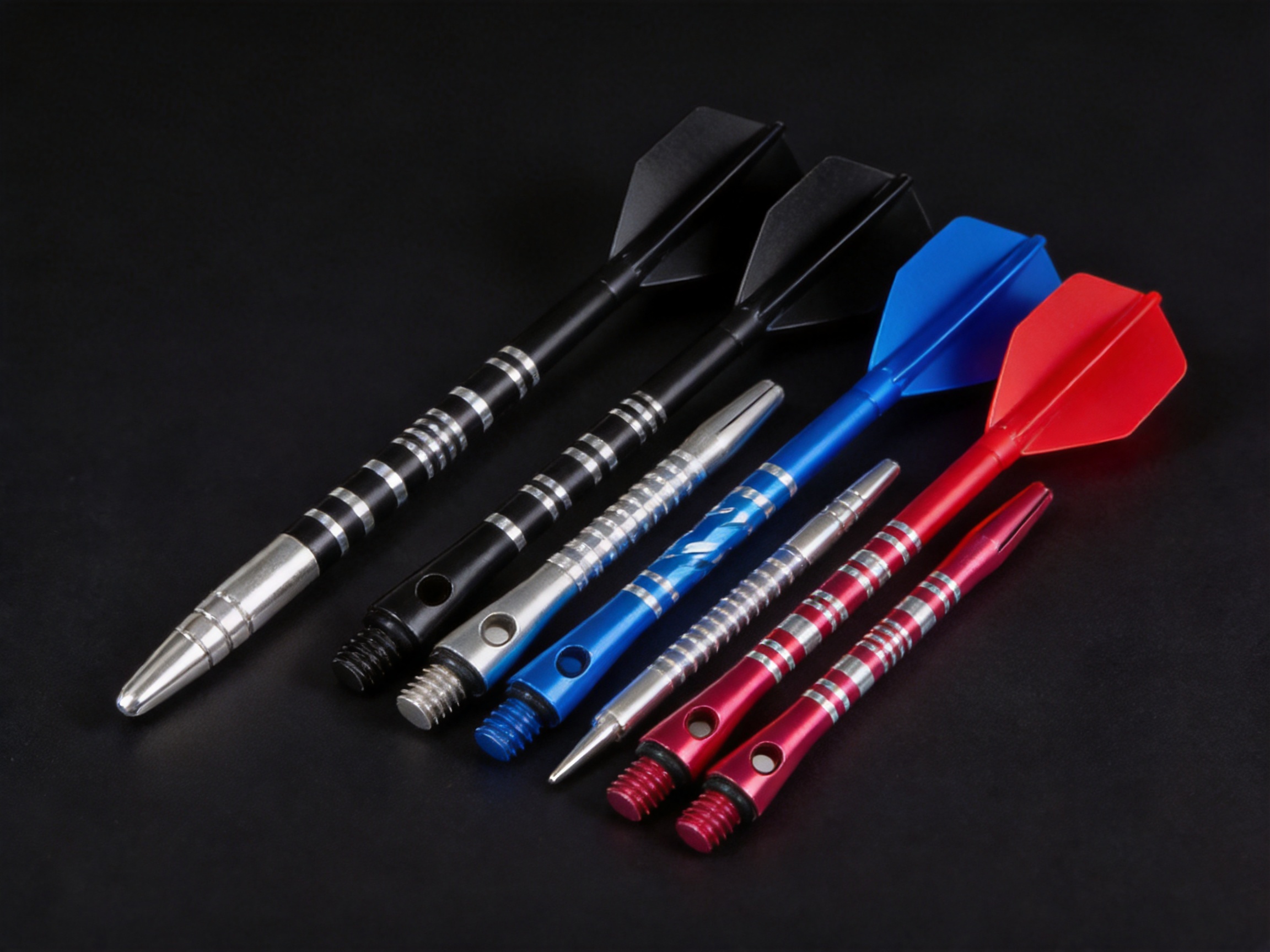
How Aluminum Shafts Compare with Other Shaft Materials
Plastic shafts are widely used in the dart industry because they are economical, lightweight, and available in many forms. They are suitable for entry-level products and for players who prefer a flexible or easily replaceable component. However, some plastic designs may be more vulnerable to bending, splitting, or deformation during repeated use.
Aluminum shafts offer a different performance profile. Their rigid structure and metallic construction can provide a firmer connection and a more substantial product feel. They may also support a more premium retail position. The choice between aluminum and plastic depends on the intended customer, selling price, product design, and preferred playing characteristics.
Other metal shaft materials may provide additional weight or different mechanical properties, but they can also increase the total weight of the dart. Aluminum is often selected when a buyer wants metal construction without making the rear section unnecessarily heavy. The material therefore occupies a useful position between lightweight plastic and heavier metal alternatives.
Rather than treating one material as suitable for every application, professional dart manufacturers can provide different shaft options for different product programs. Entry-level sets, tournament-oriented products, fashion-led collections, and replacement accessories may each use a different material or finish. The value of an experienced supplier lies partly in its ability to understand these differences and organize production accordingly.
| Evaluation Area | Aluminum Dart Shafts | Basic Plastic Shafts | Commercial Consideration |
|---|---|---|---|
| Structural feel | Firm and rigid | Light and often more flexible | Choose according to the desired playing experience |
| Weight profile | Light metal construction | Very lightweight | Aluminum can add controlled weight without excessive mass |
| Visual positioning | Metallic and premium-oriented | Practical and economical | Aluminum supports higher-end presentation options |
| Customization potential | Suitable for colors and surface finishes | Also customizable, depending on material and process | Finish selection should match packaging and brand identity |
| Typical use | Replacement parts, custom darts, premium sets, and durable assemblies | Entry-level sets and economical replacement products | Product segmentation can include both materials |
| Supply requirements | Requires accurate machining, finishing, and inspection | Requires molding and dimensional control | Supplier process capability directly affects consistency |
The table demonstrates that aluminum shafts are not simply a substitute for plastic shafts. They provide a distinct combination of rigidity, appearance, weight, and commercial positioning. The best choice depends on the product strategy, but aluminum is a strong option when a brand wants a more durable-feeling and visually refined accessory.
Precision Requirements in Aluminum Shaft Production
The quality of an aluminum dart shaft depends on more than the visible surface. Internal and connecting dimensions are equally important. The shaft must fit the dart barrel correctly, hold the flight securely, and remain aligned during assembly. Even small variations can affect the customer experience when components are produced in large quantities.
Thread accuracy is a key consideration. The threaded connection must be clean, correctly formed, and compatible with the intended barrel. Damaged or incomplete threads can prevent the shaft from tightening properly, while excessive looseness can lead to movement during play. A consistent thread also makes replacement easier for players and retailers.
Length consistency is another important factor. Shafts are commonly offered in different lengths because length affects the feel and balance of the dart. Within a specified product model, however, the length should remain consistent from piece to piece. Controlled length helps ensure that a packaged set performs uniformly and looks consistent when displayed.
The flight-retention area must also be made accurately. If the opening is too loose, the flight may move or fall out. If it is too tight, installation may be difficult and the flight may be damaged. A well-controlled design provides a practical balance between secure retention and easy replacement.
Surface quality influences both function and appearance. Rough edges, burrs, scratches, uneven finishes, or inconsistent coloring can reduce the perceived value of the product. These defects may also affect assembly or create an uncomfortable user experience. Inspection procedures should therefore consider both measurable dimensions and visible finish quality.
Material Preparation and Component Processing
A structured production system begins with material preparation. Aluminum stock must be selected and handled according to the intended product requirements. Consistent material input supports more stable machining, finishing, and appearance across production batches.
Component processing may include cutting, forming, turning, threading, surface treatment, cleaning, inspection, and packing. The exact process depends on the shaft design, finish, and customer specifications. A factory with dedicated component-processing areas can organize these steps more efficiently and reduce unnecessary movement between unrelated production zones.
Yiwu Yili Sports Goods Co., Ltd. operates a manufacturing facility of approximately 25,000 square meters, with dedicated areas for component processing, assembly, packaging, and warehousing. This structured layout supports an organized flow from incoming materials to finished goods. It also provides a foundation for managing component products alongside complete dart assemblies.
Automation and Proprietary Equipment Development
Automation can improve consistency when a product requires repeated processing of many similar components. Automated or semi-automated equipment can help control positioning, processing speed, assembly sequence, and production repeatability. It can also reduce variation caused by manual handling.
YILI continuously invests in automation and proprietary equipment development. The company has introduced multiple automated production lines through independent research and development. Although the specific equipment used for each aluminum shaft model depends on its design and order requirements, the broader investment in automation strengthens the company’s ability to support consistent, high-volume manufacturing.
Automation does not eliminate the need for skilled workers or quality engineers. Instead, it combines repeatable machinery with human oversight. Operators are responsible for setup, monitoring, material changes, process adjustment, and response to abnormal conditions. Engineers and quality personnel verify that the process continues to meet defined requirements.
For B2B buyers, this combination is valuable because repeat orders should not depend entirely on individual manual operations. A documented and controlled process helps maintain product consistency over time, particularly when a customer is building a long-term private-label program.
Finishing and Appearance Control
After the main component is formed or machined, finishing operations may be applied to improve appearance, handling, and product differentiation. Depending on the design, finishing may involve cleaning, polishing, coloring, coating, or other surface treatments.
Consistent finishing requires control of preparation, process conditions, and inspection. Uneven color, inconsistent gloss, visible marks, or poor edge treatment can make a product appear inconsistent even when its dimensions are acceptable. For retail products, this matters because customers often evaluate small accessories closely through transparent packaging or product photography.
A manufacturer with experience in dart products understands that finish decisions must be considered together with the rest of the set. The shaft should complement the barrel, flight, packaging, and overall product identity. A range of finishes can also support segmentation into different collections or price levels.

Quality Control from Raw Material to Finished Product
Quality control is essential for aluminum dart shafts because the component must satisfy both functional and visual expectations. A comprehensive system should not rely only on final inspection. It should begin with incoming materials, continue during processing, and conclude with finished-product verification.
Incoming Material Inspection
Incoming inspection helps confirm that materials and purchased components meet defined requirements before production begins. This can include checking material appearance, dimensions, surface condition, and documentation where applicable. Early detection of unsuitable material reduces the risk of producing large quantities of nonconforming parts.
Material control is especially important for products that require consistent surface appearance. Variations in the starting material can affect machining behavior, finish quality, and the appearance of colored or treated surfaces. A controlled incoming process supports more predictable production results.
In-Process Monitoring
In-process monitoring focuses on the points where variation is most likely to occur. These points may include cutting length, thread formation, flight-retention dimensions, surface treatment, cleaning, and assembly. Operators and quality personnel can use inspection tools and standardized procedures to identify deviations before they affect an entire batch.
Monitoring during production also makes corrective action more efficient. If a process begins to drift, the issue can be addressed before all components are completed. This reduces waste, improves delivery reliability, and helps protect the customer’s agreed specifications.
Finished Product Testing
Finished product inspection evaluates the completed shaft as it will be delivered to the customer. Typical checks may include appearance, dimensions, thread condition, alignment, surface finish, packaging quantity, and labeling. The specific inspection plan should reflect the customer’s requirements and the intended product application.
For an aluminum shaft, finished inspection should confirm that the component is free from obvious burrs, severe scratches, deformation, loose connections, and visible finishing defects. Samples may also be assembled with compatible dart parts to verify practical fit and usability.
Yiwu Yili Sports Goods Co., Ltd. maintains an independent QC department responsible for raw material inspection, in-process monitoring, and finished product testing. This separation helps provide an organized quality function rather than leaving inspection entirely to the production team. It also supports the company’s stated focus on consistent size, weight, and appearance.
Manufacturing Strengths Supporting Global B2B Supply
A reliable accessory supplier must provide more than a single product. Global buyers need stable production, organized communication, packaging coordination, order execution, and export experience. A supplier’s overall manufacturing structure can influence the success of an aluminum shaft program just as much as the component’s design.
Dedicated Focus on the Dart Category
YILI focuses exclusively on dart-related product categories, including sisal dartboards, flocked dartboards, magnetic safety structures, dart assembly, and retail-ready product packaging. This category focus allows the company to build knowledge around the materials, components, assembly relationships, and customer expectations specific to darts.
For an aluminum shaft buyer, this focus is useful because the supplier understands how the shaft functions as part of a complete dart system. The company can consider compatibility with barrels, flights, packaging, and finished sets rather than treating the shaft as an unrelated general hardware item.
Integrated Production and Warehousing
Dedicated areas for component processing, assembly, packaging, and warehousing support a more coordinated production system. Components can be processed, inspected, assembled, packed, and stored through a planned workflow. This arrangement helps reduce handling confusion and supports better inventory organization.
Warehousing is important for B2B customers because orders may include different shaft lengths, colors, packaging formats, and related dart products. Proper storage reduces the risk of mixing variants and supports more accurate order fulfillment.
Experience in Export Markets
The company exports products to Europe, North America, and the Middle East, serving brand owners, retail chains, and distributors. Experience with international customers can support clearer documentation, packaging coordination, production scheduling, and shipment preparation.
Different markets may have different expectations for packaging, labeling, product presentation, and order quantities. A supplier familiar with export programs is better positioned to discuss these needs during product development and before production begins.
Long-Term Manufacturing Development
Founded in 1993, YILI has developed extensive experience in dart manufacturing. The company established an overseas sales network in 1995, built a new factory in 2001, launched its sisal dartboard production line in 2017, introduced multiple automated production lines through independent research and development in 2023, and expanded into a new production facility in 2024.
This development history reflects a long-term investment in production capability rather than a short-term trading model. For B2B customers, long-term manufacturing experience can support more stable communication, repeat-order planning, and product-development cooperation.
The company has also been designated as a standard-setting enterprise for dart production. This position reflects involvement in the broader development of manufacturing standards within the dart category. For buyers evaluating suppliers, such industry participation can be one factor in assessing technical experience and commitment to the product field.
Applications for Aluminum Dart Shafts
Complete Dart Sets
Aluminum shafts can be included in complete steel-tip or soft-tip dart sets, depending on the design and intended use of the finished product. Their metallic appearance can support a premium presentation, while their rigid construction can contribute to a dependable assembly.
For complete sets, shaft selection should be coordinated with the barrel, point, flight, and case. The total weight and balance should be reviewed as a complete system rather than by looking at the shaft alone. A supplier with experience in complete dart assembly can help organize this coordination.
Replacement Accessory Packs
Replacement packs are a practical retail application. Players may want additional shafts for routine maintenance, experimentation with different lengths, or replacement after damage. Aluminum shafts can be offered in single-style packs, mixed-color assortments, or coordinated accessories with matching flights.
Retail packaging can be developed for hanging displays, countertop presentation, online fulfillment, or inclusion in larger maintenance kits. The appropriate format depends on the customer’s sales channel and target market.
Private-Label and OEM Programs
Private-label brands may use aluminum shafts to create a consistent visual identity across a dart collection. Color, finish, packaging, and accessory combinations can be adapted to the brand’s positioning. The supplier may also support different product configurations for entry-level, intermediate, and premium collections.
OEM and ODM cooperation requires early specification management. Buyers should provide information about preferred lengths, finish, color, compatibility, packaging, labeling, order quantity, and inspection expectations. The manufacturer can then evaluate the production process and prepare samples or pre-production confirmations where appropriate.
Retail and Distributor Programs
Distributors often require a broad product portfolio rather than one isolated component. Aluminum shafts can be combined with dartboards, dartboard cabinets, complete darts, flights, cases, and other accessories. A supplier offering several dart categories can help distributors build a more coherent product range.
For retail chains, consistency and replenishment are especially important. A shaft model that sells successfully must be available for repeat orders with stable specifications and packaging. Production planning, warehousing, and quality records all contribute to this continuity.
Important Considerations for Buyers
Before placing an order, buyers should define the intended market and product position. A shaft intended for a premium custom dart collection may require a different finish and package presentation from one included in a value-oriented starter set.
Compatibility should be confirmed before mass production. The shaft should be tested with the intended barrel and flight. Buyers should verify the thread system, shaft length, retention method, overall weight, and assembly behavior. Samples provide an opportunity to identify issues before a large order is released.
Appearance requirements should also be documented clearly. Terms such as metallic, matte, polished, colored, or anodized-style appearance can be interpreted differently unless supported by physical samples or agreed visual standards. Buyers should clarify acceptable variation, inspection lighting, and packaging protection.
Packaging specifications should include the number of pieces per pack, pack type, labeling, barcode requirements where applicable, carton marks, and protection against scratches. Aluminum components can be durable but may still experience surface damage if they move against one another during transport. Suitable inner packaging can help preserve appearance.
Order planning should account for product variants. Different lengths, colors, finishes, and packaging formats should be identified by clear item codes. This helps reduce confusion during production, storage, picking, and shipment.
Finally, buyers should discuss quality documentation and inspection expectations before production. A clear agreement on sampling, defect classification, dimensions, appearance, and packing can reduce disputes and provide a more objective basis for order acceptance.
Why Manufacturing Infrastructure Matters to Product Performance
Product performance begins with design but depends heavily on manufacturing execution. An aluminum shaft can be designed correctly and still fail commercially if the production process creates inconsistent threads, uneven lengths, poor finishes, or unreliable packing.
A structured factory provides several advantages. Dedicated processing areas help organize material movement. Automated lines support repeatability. Independent quality personnel provide additional oversight. Warehousing helps separate product variants. Experience with export orders supports documentation and shipment coordination.
These capabilities are particularly important for B2B buyers because commercial orders are larger and more repeatable than individual purchases. A buyer may need thousands of units with the same dimensions and appearance, followed by additional orders months later. The supplier must be able to reproduce the product without significant changes in quality or presentation.
YILI’s approximately 25,000-square-meter operational facility, automation investment, QC department, and long-term dart specialization provide a manufacturing foundation for this type of supply relationship. The company’s capabilities cover component processing, assembly, packaging, warehousing, and global export support, allowing aluminum shafts to be managed as part of a broader dart-product program.
Frequently Asked Questions
What are aluminum dart shafts used for?
Aluminum dart shafts connect the dart barrel to the flight. They help hold the flight in position and contribute to the balance, rigidity, appearance, and overall assembly of the dart. They may be used in complete dart sets, replacement packs, custom darts, and private-label products.
Are aluminum shafts better than plastic shafts?
Neither material is universally best for every player or product. Aluminum shafts generally offer a firmer, more rigid construction and a metallic appearance, while plastic shafts are often lighter and more economical. The best choice depends on the intended playing characteristics, price position, durability expectations, and product design.
Do aluminum shafts add significant weight to a dart?
Aluminum is a relatively light metal, but any material change can influence the total weight and balance of a dart. The effect depends on the shaft design, length, and the other components in the assembly. Buyers should evaluate the complete dart rather than judging the shaft separately.
Can aluminum dart shafts be customized?
Aluminum shafts can support different lengths, colors, visual finishes, and packaging formats, depending on the product design and production process. Private-label customers should discuss customization requirements with the manufacturer before sampling and confirm the final appearance through approved samples.
What should be checked when evaluating shaft quality?
Important factors include thread accuracy, length consistency, flight retention, alignment, surface finish, absence of burrs and deformation, color consistency, packaging protection, and compatibility with the intended barrel and flight. A practical assembly test is useful in addition to visual and dimensional inspection.
Can aluminum shafts be supplied as part of complete dart sets?
Yes. Aluminum shafts can be used as components in complete dart assemblies, provided that the shaft is compatible with the selected barrel, flight, and product design. A supplier specializing in darts can help coordinate the shaft with the other components and packaging.
What types of companies purchase aluminum dart shafts?
Typical B2B buyers include dart brands, sporting-goods wholesalers, distributors, retail chains, online retailers, custom dart businesses, and manufacturers of complete dart sets. Buyers may purchase shafts as replacement accessories or as components for private-label and OEM programs.
Why is factory quality control important for a small component?
Small components can have a large effect on the usability and perceived quality of a complete product. Inconsistent threads, poor finishes, or incorrect packing can create assembly problems and customer complaints. Raw material inspection, in-process monitoring, and finished-product testing help reduce these risks.
What manufacturing capabilities does Yiwu Yili Sports Goods Co., Ltd. provide?
The company specializes in dartboards, darts, and related sporting products. Its facility includes areas for component processing, assembly, packaging, and warehousing. The company also operates an independent QC department, invests in automation and proprietary equipment development, and supports global B2B customers with OEM and ODM production capabilities.
How should a buyer begin an aluminum shaft project?
A buyer should first define the target market, product design, shaft length, compatibility requirements, finish, colors, packaging, expected order quantity, and quality standards. Samples should then be reviewed and tested before mass production. Clear item codes and approved specifications help support repeat orders.
Conclusion
Aluminum dart shafts provide a valuable combination of rigidity, controlled weight, durability, visual appeal, and customization potential. They are suitable for complete dart sets, replacement accessories, custom products, private-label collections, and distributor programs. Their compact size does not reduce their importance: the shaft plays a direct role in flight retention, dart balance, assembly quality, and the customer’s perception of the finished product.
The advantages of aluminum become most meaningful when supported by accurate manufacturing. Consistent thread formation, controlled length, clean edges, reliable flight retention, and stable surface finishing are essential to producing a dependable shaft. These requirements call for organized material handling, suitable processing equipment, process monitoring, and final inspection.
Yiwu Yili Sports Goods Co., Ltd. combines long-term specialization in darts with a structured manufacturing system covering component processing, assembly, packaging, warehousing, and quality control. Its approximately 25,000-square-meter facility, investment in automation and proprietary equipment, independent QC department, and experience serving international B2B customers provide a strong foundation for aluminum shaft production and related dart programs.
For wholesalers, retailers, distributors, and brand owners, the right supplier should be evaluated not only by the appearance of a sample but also by the company’s ability to maintain quality across volume orders and repeat production. A manufacturer with category expertise, process discipline, export experience, and OEM/ODM capability can help turn aluminum dart shafts from a basic accessory into a reliable and commercially effective part of a complete product strategy.
References
1. Yiwu Yili Sports Goods Co., Ltd. Company information and manufacturing profile supplied for product presentation.
2. Yiwu Yili Sports Goods Co., Ltd. Product information for Aluminum Dart Shafts, including product category and image references.
3. General manufacturing principles for aluminum component processing, dimensional control, surface finishing, and quality inspection.
4. General dart equipment principles concerning the relationship among barrels, shafts, flights, balance, and assembly.
5. General B2B product-development practices for private-label, OEM, ODM, packaging, and repeat-order management.
Product: Aluminum Dart Shafts

Recommended Products
-
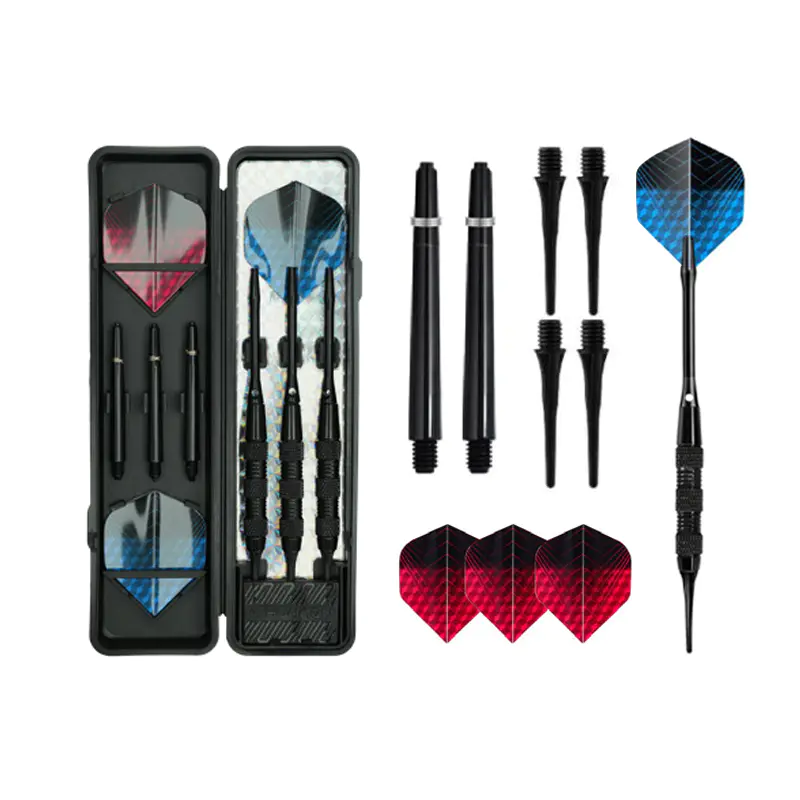


BL-1997 Electrophoretic Black Copper Darts with Aluminum Shafts
-
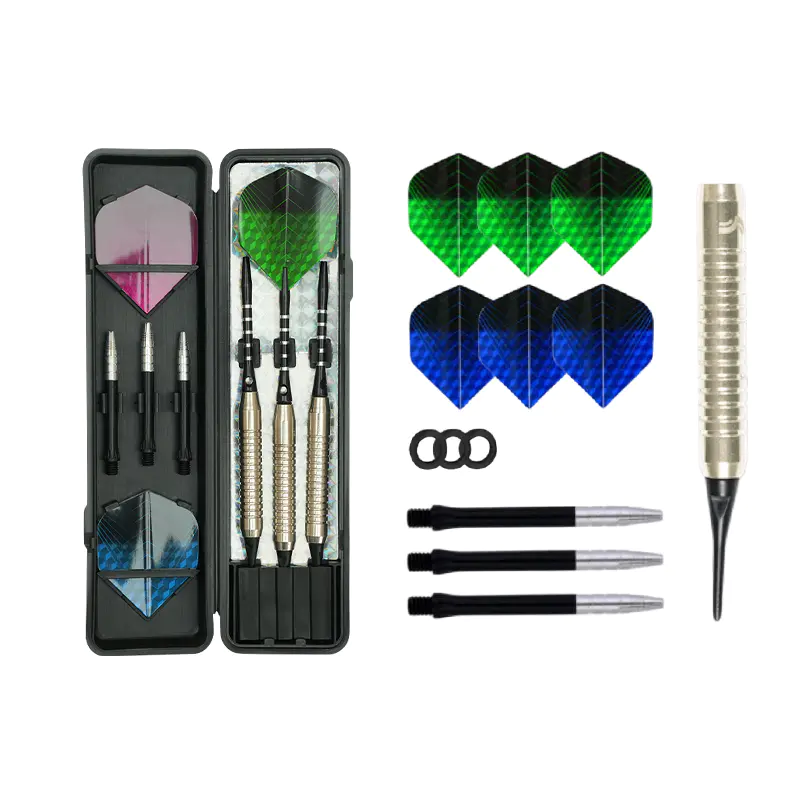
BL-1514 Nickel-Plated Steel Tip Darts Set 18g with Aluminum Shafts
-
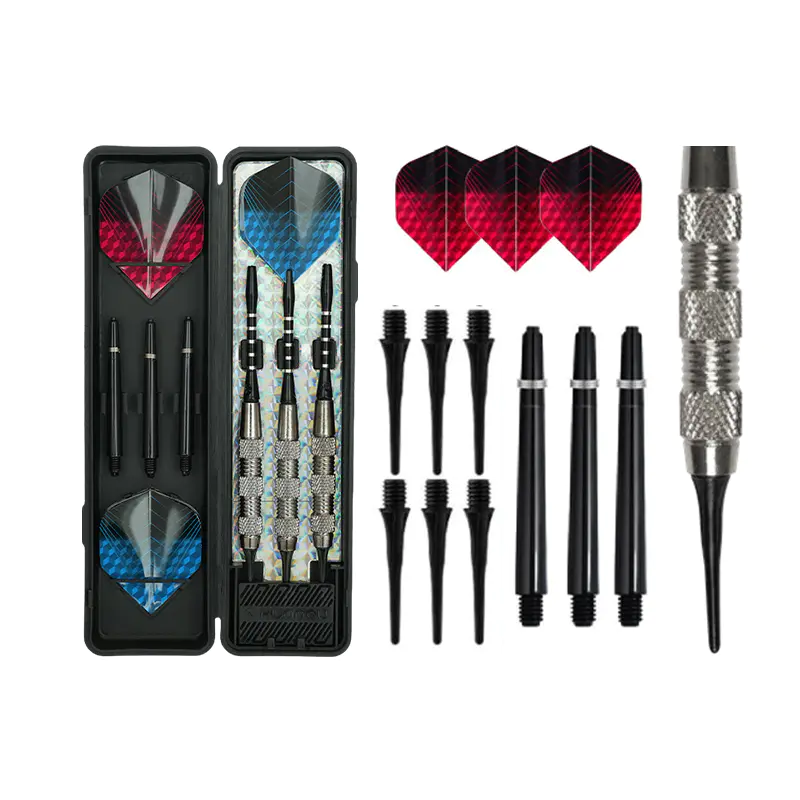
Black Copper Dart Set with Aluminum Shafts and Slim Case
-
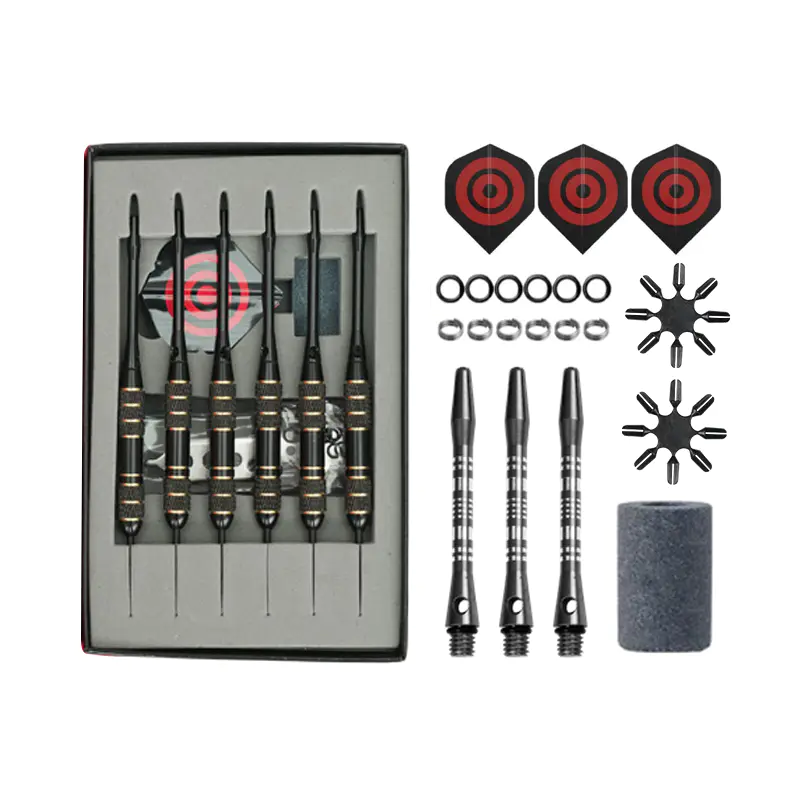
24g Electrophoresis Black Copper Darts with Aluminum Shafts Set
-
Mini Desktop Dartboard Set with Wooden Cabinet for Office Decor
-
Safety Soft Tip Dartboard Set for Kids and Family Play
-

alysa@yilisports.cn
-

+86-15355379817
-

No. 22, Suhe Road, Yibei Industrial Zone, Yiwu City, Zhejiang Province, China
Copyright © 2026 by Yiwu Yili Sports Sports Goods Co., Ltd. Rights Reserved.
